
Early childhood education is evolving rapidly, with new research and technology shaping how young children learn. Effective lesson planning for early childhood is now more important than ever as we look toward 2026 and beyond.
This expert guide will help educators and caregivers stay ahead by providing the latest strategies, practical tools, and research-backed steps for impactful lesson plans. Readers will gain actionable insights to create engaging, developmentally appropriate experiences for young learners.
Discover how adaptive planning leads to better engagement, stronger learning outcomes, and greater educator confidence. Explore expert tips, step-by-step planning methods, and technology integration that can transform your classroom. Start implementing these strategies today to foster a thriving learning environment for every child.
Key topics include understanding child development, setting clear objectives, designing lesson structure, integrating play and assessment, leveraging technology, and adapting for diverse needs.
Foundations of Lesson Planning in Early Childhood
Understanding the foundations of lesson planning for early childhood is crucial for creating meaningful educational experiences. These foundations blend knowledge of child development, core planning principles, and an understanding of the educator’s evolving role. By focusing on these pillars, educators can design lessons that meet the diverse needs of young learners while fostering growth and curiosity.
Understanding Early Childhood Development
Effective lesson planning for early childhood begins with a deep understanding of developmental milestones. From ages 0 to 8, children experience rapid cognitive, social, emotional, and physical growth. Research shows that 90% of brain development occurs before age five, highlighting the importance of early experiences (Harvard Center on the Developing Child).
For example, preschoolers benefit from activities that support fine motor skills, like stringing beads or using tweezers. Differentiating between toddlers, preschoolers, and kindergarteners ensures lessons are age-appropriate and responsive. A child-centered approach, rather than a content-centered one, allows lesson planning for early childhood to nurture long-term learning and adapt to each child’s needs.
Core Principles of Effective Lesson Planning
Successful lesson planning for early childhood is grounded in clear principles. Alignment with early learning standards, such as those from NAEYC or state frameworks, ensures consistency and quality. Balancing structure and flexibility allows teachers to respond to children’s emerging interests.
Holistic development is key, integrating social, emotional, cognitive, and physical growth. For instance, combining literacy with social skills during morning circle time supports multiple domains. Intentionality and clear learning goals guide every activity. Data from Edutopia (2023) reveals that classrooms with structured plans see 30% higher engagement. Culturally responsive and inclusive planning ensures all children feel valued and supported.
The Role of Play-Based Learning
Play is the heart of lesson planning for early childhood. Through play, children develop problem-solving abilities, creativity, and social skills. There are many types of play, including guided, free, imaginative, and cooperative. Play-based programs have been linked to improved problem-solving (Pyle & Danniels, 2017).
For example, role-play can introduce math concepts in a fun, memorable way. Balancing academic and play-based activities is vital, as play supports foundational skills across all domains. Addressing parent concerns about the balance between play and academics is essential, reinforcing that play is a powerful vehicle for learning.
| Type of Play | Description | Example |
|---|---|---|
| Guided | Adult-supported | Puzzle games |
| Free | Child-initiated | Building with blocks |
| Imaginative | Pretend scenarios | Playing house |
| Cooperative | Group collaboration | Team art projects |
Common Challenges and Solutions
Lesson planning for early childhood comes with unique challenges. Time constraints and heavy workloads are common, with 60% of teachers citing lack of planning time as a top concern (EdWeek, 2022). Educators must also adapt to a wide range of developmental levels within one classroom.
Managing transitions and routines can be difficult, but visual schedules help reduce anxiety and support smoother changes. Collaboration with colleagues, sharing resources, and engaging in ongoing training are effective solutions. For practical ideas and templates, educators can explore Early childhood lesson plans examples to streamline their planning and save time.
The Evolving Role of Educators in 2026
In 2026, the educator’s role in lesson planning for early childhood continues to evolve. Teachers increasingly act as facilitators and co-learners, guiding children’s inquiry while reflecting on their own practices. Ongoing professional development and reflective practice help educators stay current and responsive.
Incorporating student voice empowers children and enriches lesson planning for early childhood. Technology serves as a valuable support tool, enabling more personalized learning but never replacing the human touch. Preparing for future trends ensures lesson plans remain relevant and effective in an ever-changing educational landscape.
Step-by-Step Guide to Lesson Planning for Early Childhood
Effective lesson planning for early childhood requires a thoughtful, systematic approach. Each step builds on research, observation, and creativity, ensuring every child’s needs are recognized and met. Below, discover a detailed, seven-step process that empowers educators to create dynamic, responsive lesson plans for young learners.
Step 1: Assessing Student Needs and Interests
The foundation of lesson planning for early childhood is understanding each child’s unique profile. Begin by observing children during play, group activities, and routines. Take notes on their strengths, challenges, and preferred learning styles.
Use developmental checklists, gather parent input, and conduct simple baseline assessments. Interest inventories, like asking children about favorite animals or colors, help spark engagement and guide topic selection.
For example, if many children are fascinated by animals, plan a unit exploring habitats and animal movements. Adjust approaches for language, cultural, or learning differences, ensuring inclusivity. This step shapes meaningful, individualized learning experiences.
Step 2: Setting Clear Learning Objectives
Effective lesson planning for early childhood centers on purposeful, measurable objectives. Write objectives using the SMART framework: Specific, Measurable, Achievable, Relevant, and Time-bound.
Align each objective with developmental domains and early learning standards. For instance, an objective might read, "Children will recognize and name primary colors during art time." Balance short-term goals, like mastering a new song, with long-term objectives, such as developing social skills.
Involve families in goal-setting through discussions or surveys, fostering a holistic approach. Clear objectives provide direction and enable assessment of progress.
Step 3: Designing Engaging Lesson Activities
Creativity is key in lesson planning for early childhood, especially when designing hands-on, sensory-rich activities. Select materials and tasks that appeal to visual, auditory, and kinesthetic learners.
Consider these activity ideas:
| Activity Type | Example | Developmental Focus |
|---|---|---|
| Sensory | Sorting bins with beans | Fine motor, math |
| Music & Movement | Singing counting songs | Language, rhythm |
| Art | Finger painting | Creativity, color ID |
| Science | Nature walks | Observation, inquiry |
| Dramatic Play | Grocery store role-play | Social, math |
Sequence activities to match young attention spans, starting with high-energy tasks and moving to quiet reflection. Integrate cross-curricular themes, such as combining science with art.
Multi-sensory lessons improve retention and engagement. For more detailed frameworks and practical tips, see the Step-by-step lesson planning guide.
Step 4: Structuring the Lesson Flow
A predictable flow supports effective lesson planning for early childhood. Structure each lesson with clear components: a warm-up, core activity, transitions, and closure.
Begin with a welcoming routine, like a morning meeting or a hello song. Move into the main activity, then use visual or auditory cues for smooth transitions between tasks.
End with group reflection or story time to reinforce learning. Managing time and transitions reduces anxiety and keeps young learners engaged. Flexibility is essential, allowing room for spontaneous, teachable moments that arise during the day.
Step 5: Integrating Assessment and Reflection
Assessment is an integral part of lesson planning for early childhood. Use formative strategies, including observation, anecdotal records, and portfolio collections.
Document learning through photos, checklists, and work samples. For example, track progress in block building by photographing structures over several weeks.
Encourage children to reflect on their work, fostering self-awareness. Analyze assessment data to adapt future lessons, ensuring continuous growth and responsive teaching.
Step 6: Differentiating for Diverse Learners
Diversity is central to lesson planning for early childhood. Implement strategies like scaffolding, visual supports, and flexible grouping to meet varying needs.
Modify stories, use gestures, or provide picture cues for English Language Learners. Address IEP or 504 accommodations by adapting materials and pacing.
Select culturally responsive resources, and collaborate with families and specialists to ensure every child’s success. Differentiation promotes inclusion and helps all learners thrive.
Step 7: Planning for Family and Community Involvement
Strong partnerships enhance lesson planning for early childhood. Invite families to participate in lessons or share traditions and careers.
Leverage community resources, such as museums or local parks, to enrich learning. Regular communication, like translated newsletters or digital updates, strengthens home-school connections and supports holistic development.
Integrating Technology and Innovation in Early Childhood Lesson Planning
Technology is reshaping how educators approach lesson planning for early childhood, offering new ways to engage young learners. As digital tools become more accessible, classrooms are evolving to meet the needs of today's children and prepare them for the future. Integrating innovation with proven teaching methods ensures that learning remains relevant, interactive, and meaningful.
The Digital Shift in Early Childhood Education
Since 2020, the adoption of digital resources in lesson planning for early childhood has accelerated significantly. Educators now use technology to access lesson ideas, connect with families, and differentiate instruction for diverse learners.
Recent data shows that 67% of early educators incorporate digital tools into their weekly routines. This shift brings many benefits, such as interactive story apps that promote literacy, access to global resources, and more personalized learning experiences. For example, using a storytelling app can help children develop vocabulary and comprehension skills while keeping them engaged through interactive features.
As technology becomes central to lesson planning for early childhood, educators can more easily adapt lessons to suit different learning styles and needs.
Choosing the Right Digital Tools
Selecting the appropriate technology is crucial for effective lesson planning for early childhood. Educators should consider age-appropriateness, privacy, user-friendliness, and educational value when evaluating digital tools. Popular platforms like Seesaw allow for easy portfolio creation, while Starfall supports early literacy, and Tinkercad introduces basic STEAM concepts in a playful way.
Balancing screen time with hands-on learning is essential. The American Academy of Pediatrics recommends guided, purposeful use of technology for young children. For those seeking to streamline their planning process, lesson planning with AI tools can offer personalized curriculum suggestions, saving valuable time without compromising educational quality.
By thoughtfully integrating these resources, lesson planning for early childhood becomes both efficient and impactful.
Blending Technology with Play-Based Approaches
A key principle in lesson planning for early childhood is combining digital innovation with play-based learning. Technology should enhance, not replace, the hands-on exploration that is vital at this stage. For instance, augmented reality games can turn a nature walk into an interactive science lesson, sparking curiosity and discovery.
Educators can blend digital and physical activities by using tablets for virtual art projects, then encouraging children to recreate their designs with real materials. This approach supports whole-child development and maintains a balance between screen and sensory experiences.
Ensuring equitable access to devices ensures all children benefit from technology-enhanced lesson planning for early childhood, regardless of background.
Professional Development for Tech Integration
Continuous learning is essential for educators engaged in lesson planning for early childhood. As technology evolves, teachers need ongoing training to use new platforms and tools effectively. Many schools offer professional development workshops and virtual Professional Learning Communities (PLCs) where educators share strategies and resources.
Research shows that 73% of teachers report increased confidence after targeted tech training. Peer collaboration enables educators to stay current and adapt best practices to their own classrooms. Reflective practice, supported by technology, allows for ongoing improvement and innovation in lesson planning for early childhood.
Addressing Digital Equity and Safety
Ensuring every child has access to technology is a critical consideration in lesson planning for early childhood. Educators must partner with families to bridge digital divides, providing devices or recommending community resources when needed.
Teaching digital citizenship and online safety is equally important. Establishing clear guidelines, such as family tech agreements, helps children use technology responsibly at home and in school. Open communication with parents supports healthy boundaries and maximizes the benefits of digital learning.
By addressing equity and safety, educators can create inclusive, secure environments for technology-driven lesson planning for early childhood.
Adapting Lesson Plans for Diverse Needs and Inclusive Classrooms
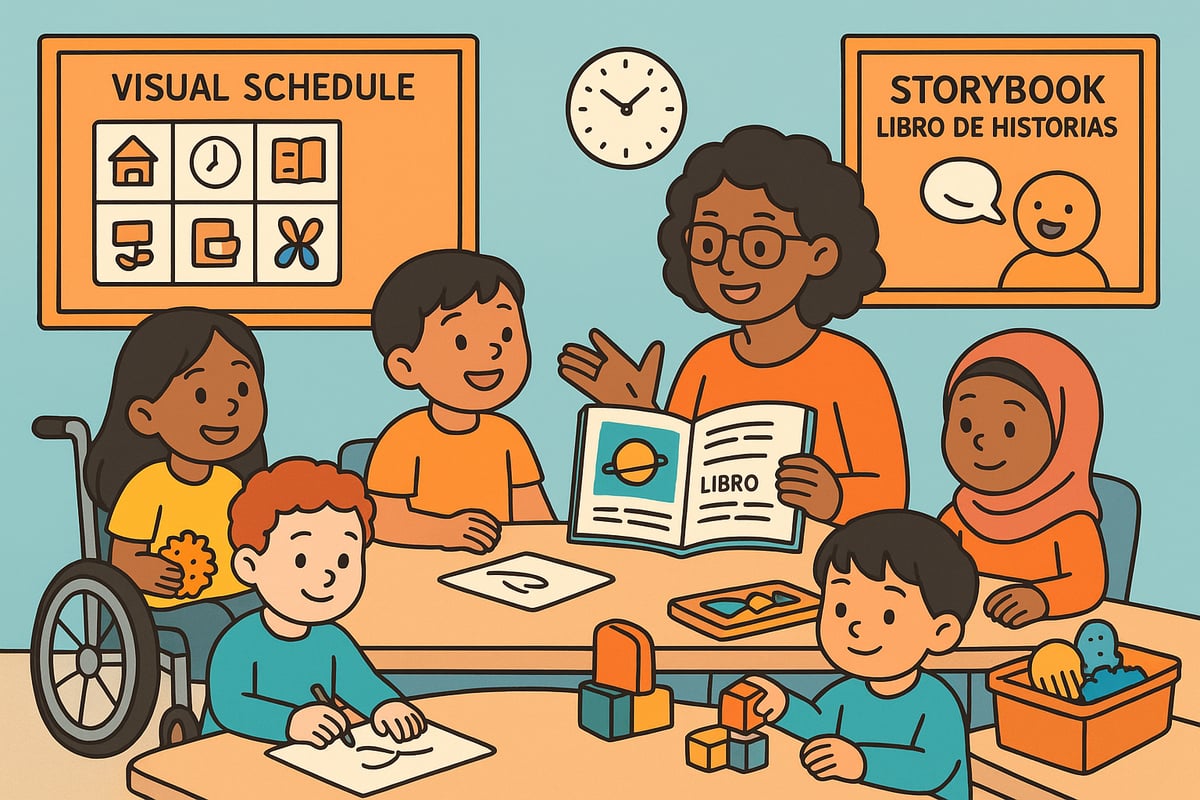
Creating truly inclusive classrooms requires a thoughtful approach to lesson planning for early childhood. Diverse learners bring unique strengths, backgrounds, and needs, making it essential to adapt lesson plans with flexibility and intention. By embracing diversity, supporting special needs, differentiating instruction, and fostering strong family partnerships, educators can ensure every child thrives.
Embracing Diversity in Early Childhood Settings
In today's classrooms, lesson planning for early childhood must reflect the growing diversity of students. Children come from a variety of cultural, linguistic, and family backgrounds, and many are dual language learners. Nearly a third of U.S. preschoolers speak more than one language at home.
To honor this diversity, educators should integrate multilingual storybooks, celebrate different cultural traditions, and use materials that reflect all children. Anti-bias education and inclusive curriculum choices help foster a sense of belonging. When students see themselves represented, they are more likely to engage and participate fully in the learning process.
Supporting Children with Special Needs
Lesson planning for early childhood is most effective when it addresses the needs of children with developmental delays or disabilities. Early intervention is key, and collaboration with specialists such as speech-language pathologists, occupational therapists, and special educators can make a significant difference.
Visual schedules, adapted materials, and sensory supports help children with autism, ADHD, or other learning differences navigate the classroom. Applying Universal Design for Learning principles ensures activities are accessible to all. Ongoing observation and open communication with families further enhance support and inclusion for every child.
Differentiation Strategies for Mixed-Ability Groups
In mixed-ability classrooms, lesson planning for early childhood requires thoughtful differentiation. Flexible grouping allows children to work at their own pace, while tiered activities ensure that everyone is appropriately challenged. For example, math centers can offer varying levels of complexity to suit individual readiness.
Using formative assessments helps teachers adjust instruction based on real-time needs. Peer mentoring and cooperative learning build confidence and social skills. For additional inspiration or to supplement classroom plans, educators can explore Free homeschool lesson plans designed for early learners. These resources can save time and provide fresh ideas for engaging all students.
Culturally Responsive Lesson Planning
Culturally responsive lesson planning for early childhood means weaving children's home cultures and languages into the fabric of each day. This can include celebrating heritage months, inviting families to share traditions, and using classroom materials that avoid stereotypes.
When lessons honor the backgrounds of every child, engagement and achievement rise. Research shows that culturally relevant curriculum increases participation and fosters respect among classmates. It is important to avoid tokenism by making diversity a consistent and authentic part of the learning experience.
Family Engagement and Communication
Strong partnerships with families are vital for effective lesson planning for early childhood. Regular communication builds trust and helps bridge home and school. Home visits, parent-teacher conferences, and digital tools such as translated newsletters make information accessible to all families.
Inviting family voices into curriculum planning ensures lessons are relevant and meaningful. Parents can share stories, traditions, or expertise, enriching the classroom community. Ongoing dialogue helps identify and address any barriers to participation, supporting each child's growth.
Creating Safe and Nurturing Environments
A positive classroom climate is the foundation of lesson planning for early childhood. Establishing clear norms for respect and inclusion helps every child feel safe and valued. Trauma-informed practices, such as calm-down corners and mindfulness routines, support emotional well-being.
Proactive approaches to bullying and exclusion are essential. Teachers should model empathy and encourage kindness in daily interactions. When children feel secure, they are more likely to take risks, try new things, and develop a lifelong love of learning.
Monitoring, Evaluating, and Improving Lesson Plans
Effective lesson planning for early childhood is not a static process. It requires regular monitoring, evaluation, and continuous improvement to ensure young learners’ needs are met. By embedding thoughtful assessment, reflection, and data-driven strategies, educators can refine their practice and foster better outcomes in the classroom.
Ongoing Assessment and Documentation
Ongoing assessment is the backbone of lesson planning for early childhood. Educators use a variety of tools to track progress, such as anecdotal notes, checklists, work samples, and digital portfolios. These methods help capture a holistic picture of each child’s development.
| Assessment Type | Description | Example Use |
|---|---|---|
| Anecdotal Notes | Brief, narrative observations | Social skills during play |
| Checklists | Lists of skills or behaviors | Fine motor skill milestones |
| Work Samples | Children’s artwork or writing | Tracking literacy progress |
| Digital Portfolios | Online collection of work/observations | Photos of science experiments |
However, time constraints remain a significant challenge. According to Only 10% of early childhood teachers have enough time to get their work done, efficient assessment strategies are essential for maintaining quality without overwhelming staff. Balancing documentation with instructional time ensures both accountability and meaningful engagement.
Reflective Practice for Educators
Reflective practice is integral to lesson planning for early childhood. By examining what worked and what did not, educators can adjust their methods and grow professionally. Reflection may take many forms:
- Keeping reflective journals to analyze daily lessons
- Using video recordings to review classroom interactions
- Engaging in peer coaching or feedback sessions
For example, after a group activity, reviewing outcomes and student responses helps pinpoint strengths and areas for improvement. This cycle of reflection and action leads to more intentional, responsive teaching. Encouraging regular reflection nurtures a continuous improvement mindset, essential for long-term success.
Using Data to Drive Instruction
Data-driven decision-making is increasingly central to lesson planning for early childhood. Educators gather information from assessments, observations, and work samples to identify trends and inform instructional choices.
Suppose a teacher notices that several children struggle with counting during math centers. By analyzing this data, targeted interventions, like small group activities or additional manipulatives, can be implemented. Setting measurable goals based on data ensures that instruction remains focused and effective.
Sharing data with families and stakeholders also supports transparency and collaboration. When everyone is informed, it becomes easier to align goals and strategies for each child’s growth.
Gathering and Responding to Feedback
Collecting feedback from children, families, and colleagues is vital for improving lesson planning for early childhood. Multiple perspectives provide valuable insights that may not be visible from the educator’s point of view.
- Parent surveys at the end of thematic units
- Child discussions about favorite activities
- Team meetings to review lesson outcomes
Incorporating this feedback into future lesson plans strengthens the curriculum and builds a culture of open communication. Responding thoughtfully also demonstrates respect for the voices of all participants in the learning community.
Staying Current with Research and Trends
Staying updated with current research and educational trends is crucial for relevant lesson planning for early childhood. Professional organizations, peer-reviewed studies, and conferences offer new strategies and insights.
For instance, recent research on executive function or play-based learning can prompt educators to adjust their approaches. Engaging with professional networks, reading journals, and implementing evidence-based practices keeps lesson planning dynamic and impactful.
Adapting plans to reflect new knowledge ensures that children benefit from the latest findings in early childhood education.
Planning for Professional Growth
Continuous professional development is a cornerstone of effective lesson planning for early childhood. Setting personal learning goals, attending workshops, and pursuing certifications foster growth and adaptability.
Modern educators also need strong digital competencies. Developing these skills is essential, as highlighted in Digital Integration in Early Childhood Education and Care: Innovating Educators’ Competencies, which underscores the importance of technology in today’s classrooms.
Opportunities for networking, mentorship, and specialized training—such as trauma-informed care or STEAM integration—equip teachers to meet evolving classroom demands. Investing in professional growth ultimately benefits both educators and their students.
As you reflect on the strategies and insights from this expert guide, remember that effective lesson planning truly shapes a child’s early learning journey—especially in our increasingly dynamic world. Whether you’re adapting activities for diverse learners or weaving technology into play, having the right tools makes all the difference. If you’re ready to personalize your approach, track progress effortlessly, and foster curiosity wherever your family’s adventures may lead, I invite you to Create Your Free Account with LearnSpark. Let’s empower every child’s growth, together—one thoughtfully planned lesson at a time.