
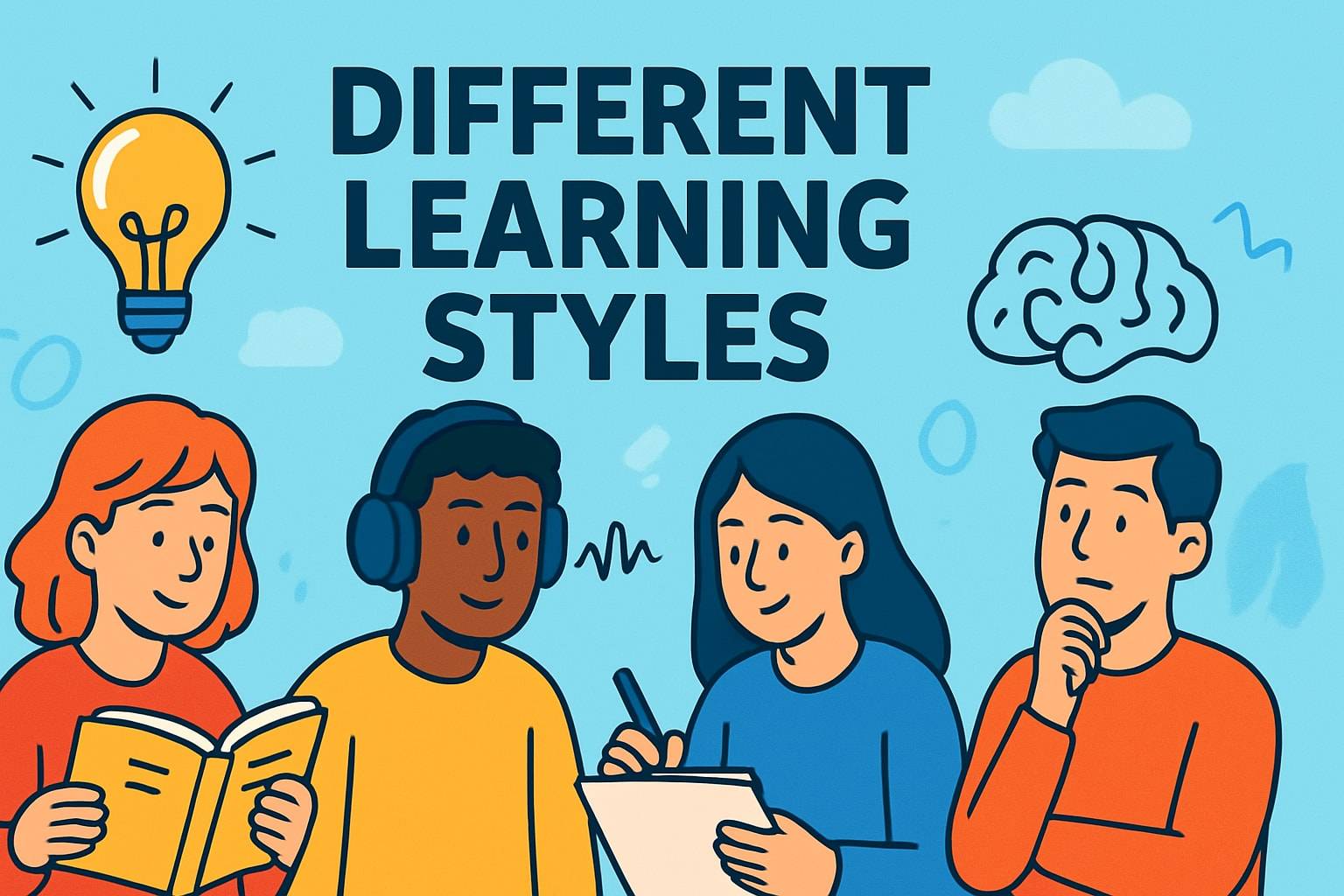
Did you know that how we learn is evolving as fast as the technology around us? In 2026, understanding the different learning styles is more essential than ever for students and educators alike.
This guide will demystify the six most recognized learning styles and show how each can shape student success. You will discover what learning styles are, how to spot them, and which practical strategies can help every learner thrive.
Curious about the future of personalized education? Get ready for actionable insights and expert advice to help you navigate the changing world of learning.
What Are Learning Styles?
Learning is not a one-size-fits-all process. The idea of different learning styles has shaped educational methods for decades, influencing how teachers and parents approach instruction. But what exactly are learning styles, and why do they matter in today’s rapidly evolving classrooms?
The History and Evolution of Learning Styles
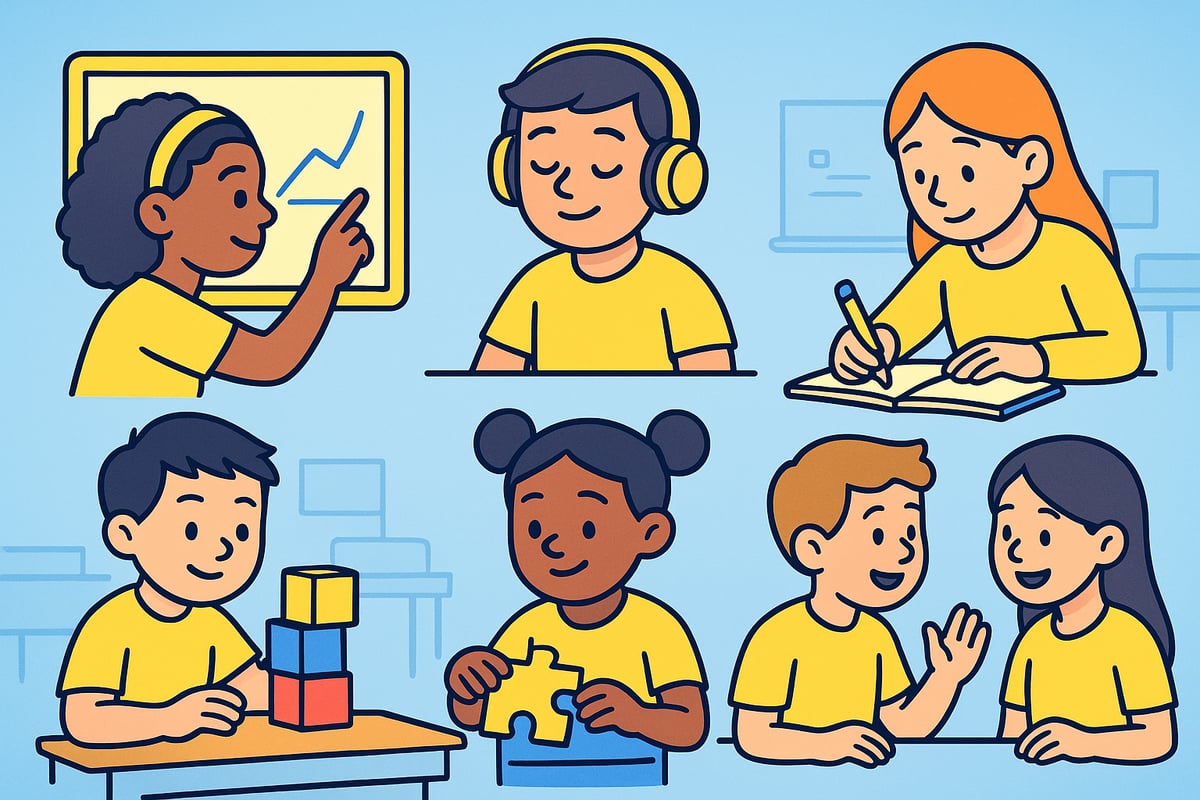
The concept of different learning styles gained traction in the late 20th century. Howard Gardner’s Multiple Intelligences theory, introduced in 1983, suggested that intelligence is not a single general ability but a blend of different modalities, such as linguistic, logical, spatial, and interpersonal strengths. Shortly after, Neil Fleming’s VARK model categorized learners into Visual, Auditory, Reading/Writing, and Kinesthetic types, making the idea accessible for educators worldwide.
The Debate: Myth or Merit?
Despite their popularity, different learning styles remain controversial among researchers. A striking statistic: a 2017 study found that 93% of UK teachers believed in the value of learning styles, yet scientific evidence supporting their impact on academic achievement is limited. Some studies suggest that matching instruction to a student’s preferred style does not guarantee better results. The debate continues, with some calling learning styles a myth, while others see practical merit in recognizing individual differences. For more on this debate, see this Evidence-Based Higher Education – Is the Learning Styles ‘Myth’ Important? study.
Why Do Learning Styles Persist?
Despite mixed evidence, different learning styles persist in education because they offer a framework for understanding how students engage with material. Educators and parents use these categories to personalize lessons, increase engagement, and support students who might otherwise struggle. The framework can encourage reflection and adaptation, even if scientific consensus is lacking.
Clarifying Terms: Learning Styles, Preferences, and Teaching Methods
It is important to distinguish between different learning styles, learning preferences, and teaching methods. While learning styles refer to the ways individuals process information, preferences simply describe favored ways of engaging with content, and teaching methods are the strategies instructors use to deliver lessons.
| Term | Definition | Example |
|---|---|---|
| Learning Styles | How individuals best process and retain information | Visual, Auditory, Kinesthetic |
| Learning Preferences | Personal inclinations toward certain activities or materials | Preferring videos over books |
| Teaching Methods | Approaches used by educators to convey content | Lectures, group work, projects |
Real-World Examples
In a classroom, a teacher might use diagrams for visual learners, discussions for auditory learners, and hands-on experiments for kinesthetic learners. At home, a parent may encourage a child to write summaries, listen to podcasts, or build models, depending on their observed strengths. Recognizing different learning styles can help make instruction more inclusive and engaging.
Looking Ahead: Blended and Adaptive Learning in 2026
As technology advances, the educational landscape is shifting toward blended and adaptive learning. In 2026, digital tools and AI-driven platforms are increasingly used to identify and respond to different learning styles, making education more flexible and responsive. This shift supports the move toward personalized learning strategies, ensuring that every learner’s needs are addressed in real time.
Understanding different learning styles is not just about labels. It is about creating opportunities for every learner to thrive, setting the stage for a more adaptive and personalized future in education.
The 6 Different Learning Styles Explained
Understanding the six most recognized learning styles is essential for educators, parents, and learners navigating the diverse educational landscape of 2026. While research shows that most individuals use a combination of styles, being aware of the different learning styles can make teaching and learning more effective.
Let us begin with a quick overview table to compare these six styles side by side:
| Learning Style | Key Traits | Example Activity | Best Strategies |
|---|---|---|---|
| Visual | Learns via images, diagrams | Infographics, mind maps | Videos, color-coded notes |
| Auditory | Prefers listening & speaking | Podcasts, discussions | Read-alouds, music |
| Reading/Writing | Engages most with text | Summaries, essays | Handouts, journaling |
| Kinesthetic | Needs movement, hands-on tasks | Experiments, role-play | Lab work, field trips |
| Logical | Loves reasoning, patterns | Puzzles, flowcharts | Problem-solving, coding |
| Social | Thrives in groups | Team projects, debates | Group work, peer feedback |
Each of the different learning styles brings unique strengths and challenges. Recognizing and embracing these differences can help unlock a learner's full potential.

1. Visual Learning Style
Visual learners process information most effectively through images, diagrams, and spatial understanding. This group often finds color-coded notes, mind maps, and visual aids especially helpful. When teachers use infographics to explain complex topics, visual learners can grasp concepts more quickly.
Approximately 65 percent of people exhibit a preference for visual learning, making it one of the most common of the different learning styles. These learners benefit from videos, illustrations, flowcharts, and written instructions. Teachers can support them by incorporating graphic organizers and encouraging students to draw or visualize new ideas.
However, visual learners may struggle when information is delivered only verbally. To address this, encourage students to create their own visual representations of concepts, such as sketches or diagrams. This approach not only supports their style but also enhances memory retention.
2. Auditory Learning Style
Auditory learners absorb information best through listening and speaking. They thrive in environments where lectures, discussions, podcasts, and verbal instructions are prominent. For example, an auditory learner may remember details from group conversations or audio recordings more effectively than from written notes.
These learners excel when lessons include read-alouds, music, and oral repetition. Teachers supporting different learning styles can engage auditory learners by facilitating debates, using mnemonic songs, or encouraging group discussions.
One challenge for auditory learners is that silent reading or visual-only presentations may not fully engage them. A practical tip is to allow these students to record lessons for playback or to summarize information aloud. This strategy helps reinforce their learning and builds confidence in their abilities.
3. Reading/Writing Learning Style
Learners with a reading/writing preference engage most deeply with text. They excel at taking notes, reading textbooks, and completing written assignments. For example, creating detailed written summaries or outlines is a natural strength.
This style is a key part of the spectrum of different learning styles. Best strategies include providing handouts, encouraging journaling, and assigning research projects. These learners benefit from extensive written resources and opportunities to express ideas through essays and reports.
One challenge is that hands-on or purely visual activities may not fully capture their interest. To bridge this gap, integrate written instructions or reflective writing tasks alongside other activities. For more practical ideas, explore resources that focus on making learning fun for kids across all styles.
4. Kinesthetic Learning Style
Kinesthetic learners understand concepts best through movement, touch, and hands-on experiences. They enjoy experiments, role-playing, and physical activities, making them active participants in the classroom. For example, learning geometry by building shapes or using manipulatives brings abstract ideas to life.
Although only about 5 percent of individuals are primarily kinesthetic, many benefit from movement incorporated into lessons. Effective strategies for supporting different learning styles include interactive simulations, lab work, and field trips.
Traditional lectures or long reading assignments may pose challenges for kinesthetic learners. To address this, break lessons into shorter segments with built-in movement or tactile tasks. Encouraging students to act out scenarios or use real objects helps maintain engagement and reinforces understanding.
5. Logical (Mathematical) Learning Style
Logical learners thrive on logic, reasoning, and systems. They enjoy solving puzzles, analyzing patterns, and working with data. For instance, using flowcharts to map out processes or tackling math problems appeals to their analytical mindset.
As a key member of the different learning styles group, logical learners benefit from problem-solving activities, statistics, and logical sequencing. Incorporating coding exercises, strategy games, or structured debates into lessons can enhance their motivation.
One challenge these learners face is connecting abstract ideas to real-world applications. Teachers can help by providing practical examples and linking concepts to everyday scenarios. Encouraging students to break down complex tasks into smaller, logical steps supports their learning style effectively.
6. Social (Interpersonal) Learning Style
Social learners excel in group settings and through social interaction. They prefer collaborative projects, discussions, and peer feedback. Participating in study groups or cooperative workshops energizes them and brings out their best work.
Among the different learning styles, social learners thrive when lessons include teamwork, debates, and cooperative learning tasks. Assigning roles in group activities or facilitating peer review sessions can maximize their engagement.
However, independent or solitary assignments may be more challenging for these learners. Providing opportunities for collaboration and regular feedback from peers ensures they remain motivated and supported. Creating a classroom environment that values interaction and shared learning is key to their success.
Identifying and Supporting Different Learning Styles
Understanding how to identify and support different learning styles is essential for maximizing each learner’s potential. Whether in a classroom, at home, or through digital platforms, recognizing the unique ways individuals absorb and process information can transform educational outcomes.
Methods for Identifying Learning Styles
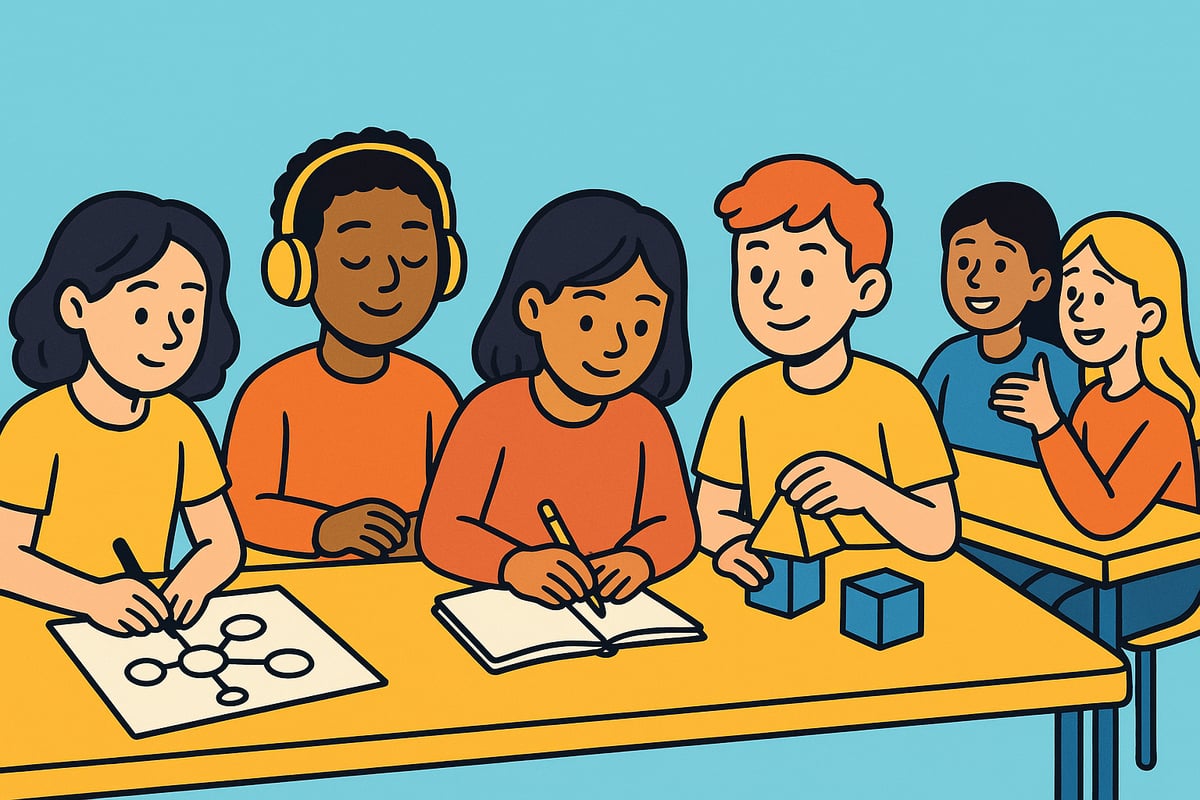
Identifying different learning styles begins with careful observation. Teachers and parents can watch how students naturally engage with material. Do they gravitate toward drawing diagrams, speaking out loud, or building models? These tendencies offer valuable clues.
Self-assessment tools and questionnaires are widely used to help learners reflect on their preferences. Feedback from peers and educators can further clarify which strategies resonate most. Increasingly, technology is playing a role. Recent advances in machine learning propose new ways to detect learning preferences, as discussed in Learning Style Identification Using Semi-Supervised Self-Taught Labeling.
Combining traditional observation with digital tools provides a more complete picture, ensuring that support for different learning styles is both accurate and dynamic.
Adapting Support Strategies
Once different learning styles are identified, adapting instruction is key. Visual learners might benefit from illustrated timelines or color-coded notes. Auditory learners could thrive with podcasts or group discussions. Reading/writing-focused students excel when given research projects or journaling tasks. Kinesthetic learners need hands-on experiments and movement breaks. Logical learners engage with data analysis and structured problem-solving, while social learners flourish in collaborative projects.
Some practical adaptations include:
- Turning history lessons into storyboards for visual learners.
- Using mnemonic songs for memorization.
- Organizing hands-on science experiments.
- Assigning group roles to foster social interaction.
These strategies ensure that different learning styles are actively supported, leading to greater engagement and understanding.
The Importance of Multimodal Teaching
Most students do not fit neatly into one category. Research shows that combining approaches reaches a wider range of learners. Multimodal teaching—using visuals, audio, text, movement, and collaboration—caters to different learning styles within the same lesson.
For example, presenting information both visually and verbally, or pairing reading assignments with group discussions, helps reinforce concepts. This approach boosts retention and accommodates the varied strengths present in any learning environment.
Creating Inclusive and Flexible Learning Environments
Avoid rigidly categorizing learners. Overemphasis on a single style can limit growth. Instead, encourage flexibility and exploration of new techniques. Inclusive environments provide a blend of resources and allow students to discover what suits them best.
For remote or diverse settings, offer multiple formats: video, audio, interactive tasks, and written materials. Encourage feedback, adapt as needed, and celebrate the diversity of different learning styles. This flexibility empowers all learners to reach their potential, no matter where or how they learn.
The Role of Technology and Adaptive Learning in 2026
The landscape of education in 2026 is being reshaped by rapid advances in technology. Digital tools and artificial intelligence are opening new possibilities for personalizing instruction based on different learning styles. As classrooms become increasingly connected, both teachers and students are experiencing more tailored and engaging educational journeys.

Adaptive learning platforms are at the heart of this transformation. These systems use real-time data to analyze how each student responds to content and activities. By identifying patterns in engagement and performance, adaptive technology can adjust lessons instantly, catering to different learning styles. For example, a student who excels with visual aids might receive more infographics, while another who prefers hands-on tasks could get interactive simulations.
A key innovation in 2026 is the seamless integration of multimedia and interactive content. Video lectures, podcasts, and gamified quizzes ensure students with different learning styles remain engaged and motivated. Virtual reality is making lessons immersive, especially for kinesthetic learners who benefit from movement and real-world experiences. Collaboration tools connect students globally, supporting social learners through group projects and discussions.
The rise of worldschooling, homeschooling, and remote education is expanding access to personalized learning. Families and educators can now choose tools that best fit different learning styles, regardless of location. However, as educational data becomes central to adaptive systems, privacy and ethical considerations are more important than ever. Schools and tech providers must safeguard student information and ensure transparency in how algorithms make instructional decisions.
Looking ahead, the future of education will likely see even more sophisticated AI-driven personalization. As highlighted in EdTech Trends in 2026: How Intelligence Will Redefine Learning Systems, intelligent platforms are expected to further refine how different learning styles are supported. Predictive analytics, emotional recognition, and advanced content recommendations will empower educators to meet every learner’s needs.
In summary, technology in 2026 is making it easier than ever to recognize and support different learning styles. By combining adaptive software, multimedia resources, and ethical practices, education is becoming more inclusive and effective for all types of learners.
The Impact of Learning Styles on Educational Success
How do different learning styles truly influence educational success? As classrooms in 2026 become more diverse and technologically advanced, recognizing and adapting to these unique preferences can transform the learning experience for both students and educators.
Research suggests that when instruction is tailored to different learning styles, students often show increased motivation and engagement. For example, a visual learner might find diagrams or mind maps more effective than traditional lectures, while kinesthetic learners thrive during hands-on experiments. These adaptations can boost retention and make learning more enjoyable.
| Benefit | Challenge |
|---|---|
| Improved engagement | Not all subjects fit every style |
| Higher motivation | Overemphasis may limit skill development |
| Better knowledge retention | Scientific evidence is mixed |
| Increased self-confidence | Risk of pigeonholing learners |
Many teachers and parents report that adapting lessons to different learning styles leads to more positive outcomes. In practice, this could mean offering a mix of group discussions, written assignments, and interactive projects within a single lesson. Such multimodal approaches help reach a wider range of learners and support deeper understanding.
However, the scientific community continues to debate the merit of strictly matching teaching methods to individual styles. A recent study, Debunking Learning Styles: Analyzing Key Predictors of Academic Success in Dental Education, found that factors like lecture attendance had a greater impact on performance than learning style alignment. This highlights the importance of not relying solely on style-based strategies.
It’s also crucial to avoid rigidly categorizing students. Over-focusing on one style can hinder the development of other essential skills. Instead, educators should aim for balance, integrating various teaching methods and encouraging learners to build strengths across multiple domains.
For those designing lessons or supporting students at home, clearly defined learning objectives are key. Using resources like how to write learning objectives can ensure that instruction remains purposeful and inclusive, regardless of preferred style.
Ultimately, understanding different learning styles provides a valuable framework for supporting diverse learners. By embracing flexibility, blending methods, and focusing on each student’s evolving needs, educators and parents can help unlock every learner’s potential and promote long-term academic success.
Frequently Asked Questions About Learning Styles
Understanding different learning styles often starts with a simple question: do these styles remain fixed, or can they evolve? Research shows that learning styles are not static. Many people discover their preferences shift as they grow, encounter new subjects, or adapt to varied educational settings. Additionally, it is entirely possible to have more than one dominant style, as most individuals use a blend of approaches depending on the situation.
A common misconception is confusing different learning styles with learning disabilities. While learning disabilities require specialized support, learning styles simply reflect how a person prefers to process information. Another myth is that there is a single “right” way to learn. In reality, flexibility and openness to multiple strategies are key to effective learning for everyone.
To identify your own strengths, try these quick tips:
- Observe which study methods feel most natural or enjoyable.
- Experiment with visual aids, audio resources, hands-on activities, and group work.
- Take advantage of self-assessment tools available online.
- Explore adaptive learning technology platforms that adjust to your preferences as you learn.
Remember, discovering your unique mix of different learning styles is a journey. Stay curious, revisit your preferences regularly, and be willing to try new strategies. By embracing flexibility and self-awareness, students, parents, and educators can create more inclusive and rewarding learning experiences.
Now that you’ve explored the six learning styles and how they shape educational journeys in 2026, you might be wondering how to put these insights into action for your own family’s unique needs. At LearnSpark, we believe every child’s curiosity and growth deserve to be nurtured with adaptive, personalized experiences—especially for worldschooling families on the move. If you’re ready to help your child thrive with lessons tailored to their strengths, interests, and adventures, you can start today.
Create Your Free Account
and see how easy it is to guide their learning, wherever life takes you.