Worldschooling is gaining momentum as more families turn travel into a learning adventure. Yet, organizing effective lessons while on the move presents unique challenges.
In 2025, the demand for flexible educational tools is higher than ever. Families need solutions that adapt to shifting schedules and diverse locations.
A worldschool lesson planner can transform unpredictable travel days into structured, enriching experiences for every learner. With the right system, chaos becomes opportunity.
This guide provides a step-by-step roadmap for building and using a worldschool lesson planner, ensuring learning stays seamless wherever your journey leads.
You will discover how to assess your family’s needs, select the best planner, plan lessons, use digital tools, and learn from real-world examples.
Understanding Worldschooling Needs in 2025
Worldschooling continues to evolve rapidly, meeting the needs of families who seek a global education while traveling. To use a worldschool lesson planner effectively, it is vital to understand the foundational aspects of worldschooling, the distinct challenges families face, and the importance of flexibility in both planning and execution.
Defining Worldschooling and Its Core Principles
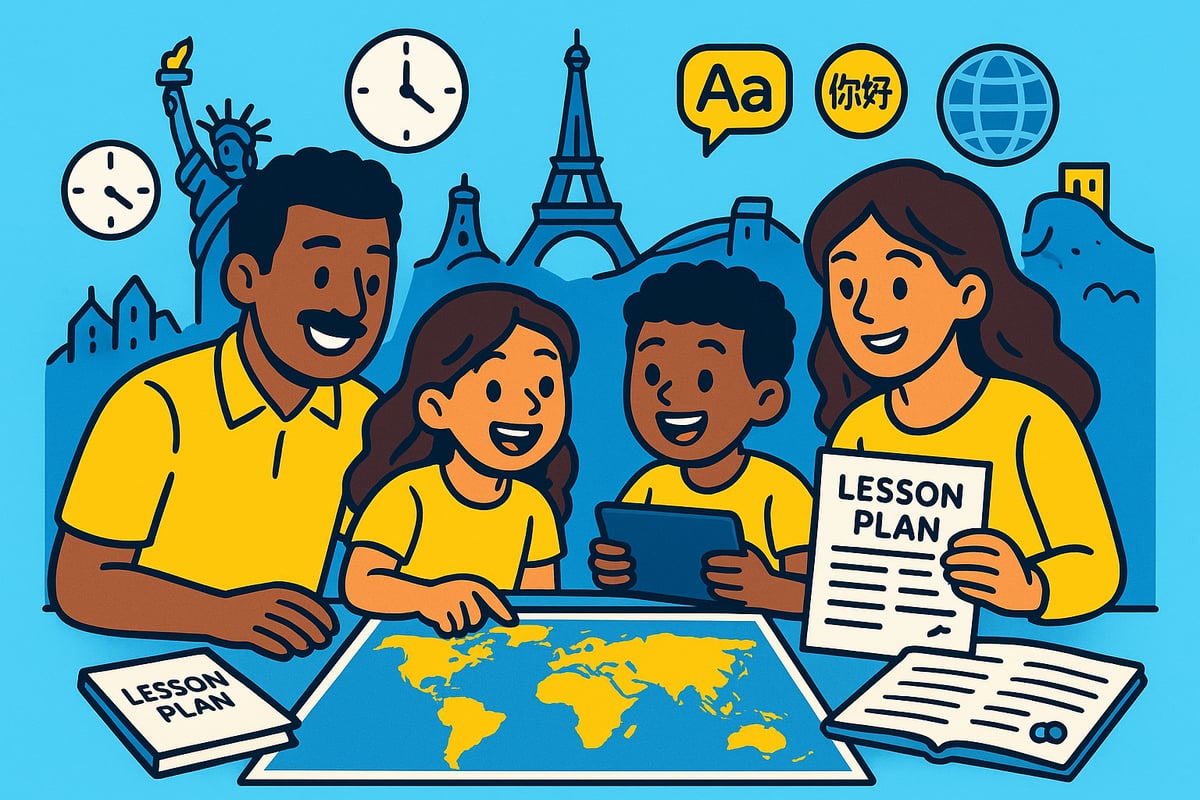
Worldschooling is an educational approach that blends global travel, hands-on learning, and cultural immersion. It encourages children to learn through real-world experiences, adapting lessons to wherever they are. Families may choose structured curriculums, unschooling, or hybrid models, each with its own strengths. The surge in digital nomadism and global community networks has shaped worldschooling in 2025, making adaptability even more crucial.
For a deeper understanding of the different philosophies and how to tailor your worldschool lesson planner to your family's needs, see Approaches to worldschooling explained. Over 60% of families prioritize flexible curricula, showing that customization is at the heart of this movement.
Unique Challenges Faced by Worldschooling Families
Families using a worldschool lesson planner encounter unique obstacles. Travel often means irregular schedules and adjusting to new time zones. Parents must balance lesson planning with logistical realities, such as transportation or accommodation changes. Language barriers and cultural differences can complicate instruction or daily life.
Maintaining academic progress without a traditional school structure is another significant challenge. For instance, a family journeying through multiple countries in a single month must align lesson content with shifting environments, ensuring continuity and relevance.
- Inconsistent schedules
- Language and cultural adaptation
- Balancing education with travel logistics
Educational Goals and Outcomes for Worldschoolers
A worldschool lesson planner should help families set both academic objectives and personal growth targets. Many parents emphasize 21st-century skills, such as adaptability, problem-solving, and intercultural competence. Instead of relying on standardized tests, families often use portfolios or project-based showcases to measure progress.
For example, students might document their experiences in a digital portfolio, reflecting on language skills gained or cultural insights discovered. This approach ensures learning is meaningful, measurable, and tailored to each child's journey.
The Importance of Flexibility and Customization
Flexibility is vital for any worldschool lesson planner. Lesson plans must adapt to new locations, changing interests, and spontaneous opportunities. Customization allows parents to modify content for different ages, learning styles, or emerging interests.
Imagine turning a visit to the Louvre into an integrated lesson on art, history, and language. This flexibility ensures learning remains relevant and engaging, no matter where the family travels or what surprises arise along the way.
Parental Roles and Responsibilities
In worldschooling, parents act as facilitators and mentors rather than traditional instructors. Their role is to nurture curiosity, encourage self-directed learning, and find a balance between structure and freedom. By supporting children’s interests and guiding them through diverse experiences, parents help create a rich, adaptable educational journey.
Choosing the Right Worldschool Lesson Planner
Selecting the right worldschool lesson planner is crucial for families who want to keep learning consistent, organized, and adaptable throughout their travels. With so many options available in 2025, understanding the types, features, and evaluation criteria will help you find a planner that aligns with your family's unique approach to worldschooling.
Types of Worldschool Lesson Planners: Paper, Digital, Hybrid
When choosing a worldschool lesson planner, families can select from paper-based planners, digital apps, or hybrid solutions. Each type offers unique advantages, depending on your travel style and learning needs.
| Planner Type | Portability | Customization | Offline Use | Example |
|---|---|---|---|---|
| Paper | High | Flexible | Always | Bullet journal |
| Digital | Varies | Highly | Sometimes | Notion app |
| Hybrid | High | Flexible | Yes | Mix of both |
A paper planner is reliable and distraction-free, while digital tools offer easy updates and sharing. Hybrid approaches blend the best of both, letting you adapt as needed.
Key Features to Look For in 2025
A modern worldschool lesson planner should offer customizable templates, multi-child tracking, and seamless calendar integration. Offline access is essential for travel to areas with limited connectivity.
Look for planners that can adapt to various educational philosophies, from structured to unschooling. According to recent data, 78 percent of families prefer planners with built-in progress tracking, allowing them to monitor learning milestones efficiently.
Essential features include:
- Customizable layouts
- Support for different ages and subjects
- Integration with digital calendars
- Data backup and offline modes
These features ensure your worldschool lesson planner remains a reliable companion wherever your journey takes you.
Evaluating Planner Options: Questions to Ask
When choosing a worldschool lesson planner, consider these key questions:
- Does it support your chosen educational approach, such as unschooling or project-based learning?
- Can it accommodate multiple children with different learning levels and interests?
- Is it easy to update, even while traveling or with limited internet?
- Does it offer the flexibility to make quick changes as plans evolve?
Create a checklist to compare options before making a decision. This process helps ensure your worldschool lesson planner will fit your family's dynamic needs, supporting both structure and spontaneity.
How AI-Powered Tools Like LearnSpark Empower Worldschool Lesson Planning
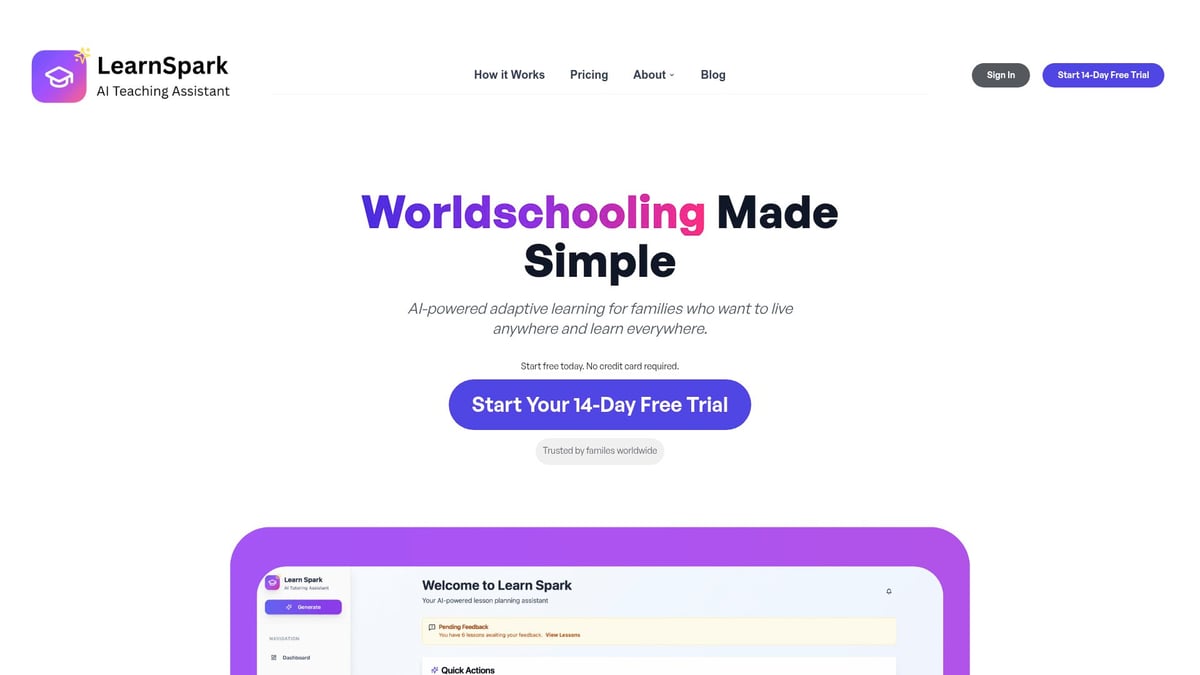
AI-driven platforms are reshaping how families use a worldschool lesson planner. Tools like LearnSpark personalize lessons based on your child's level, interests, and location, generating adaptive content and tracking progress automatically.
Key benefits include:
- Time-saving lesson generation
- Customizable content for any destination
- Offline access for remote study
To compare the top AI-powered options and find the right fit for your worldschool lesson planner, review the Best AI lesson planning tools. Real-world families have used these tools to seamlessly integrate science explorations and cultural experiences while traveling across continents.
Step-by-Step Guide: Building Your Worldschool Lesson Planner
Building an effective worldschool lesson planner empowers families to turn each travel day into a rich learning experience. This step-by-step guide walks you through the process, ensuring your planner fits your unique educational goals, travel style, and family needs.
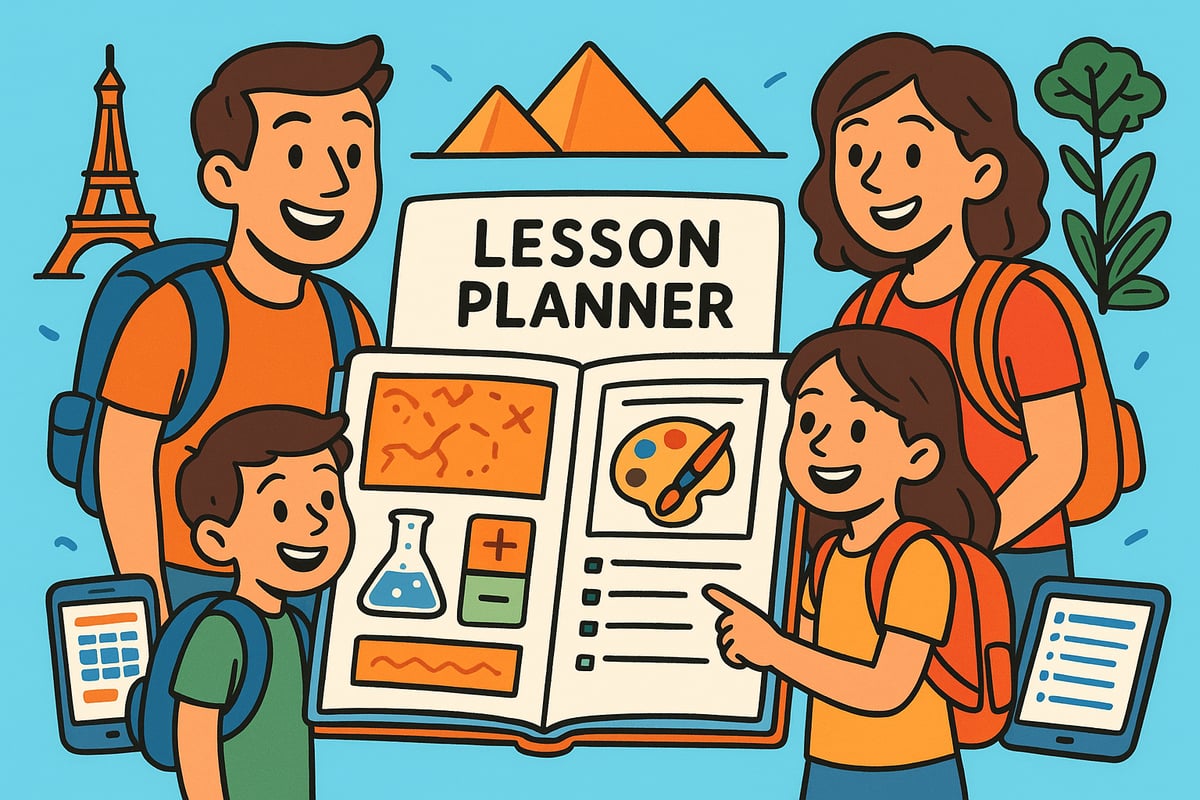
Step 1: Clarify Your Educational Vision and Goals
Start by defining what you want from your worldschool lesson planner. Are you aiming for academic achievement, cultural immersion, or skill-building? List your family's long-term and short-term learning objectives.
For example, you might set a goal for your children to develop conversational Spanish during a year in Latin America. Having clear intentions guides your planning and ensures your worldschool lesson planner remains purposeful.
Step 2: Map Out Your Travel Plans and Learning Opportunities
Align your worldschool lesson planner with your travel itinerary. Use maps and calendars to match lesson topics with your destinations, seasons, and local events.
If you plan to visit coastal Australia, you could schedule marine biology units during your stay. This approach helps you make the most of each location, using your worldschool lesson planner as a bridge between travel and education.
Step 3: Choose Your Planning Format and Tools
Decide whether your worldschool lesson planner will be digital, paper-based, or a hybrid. Each format has unique advantages. Digital tools offer easy updates and access, while paper planners provide tactile engagement.
Consider combining cloud storage or printable templates with educational apps. For more inspiration, explore the Flexible worldschooling curriculum guide, which can help you select adaptable resources for your planner.
Step 4: Create a Flexible Weekly/Daily Lesson Structure
Design a template in your worldschool lesson planner that accommodates both structured learning and spontaneous adventures. Separate days into “Adventure Days” for excursions and “Study Days” for focused learning.
A sample weekly table could look like this:
| Day | Activity Type | Focus Area |
|---|---|---|
| Monday | Study Day | Math, Language |
| Tuesday | Adventure Day | Local Museum |
| Wednesday | Study Day | Science, Art |
| Thursday | Adventure Day | Nature Hike |
| Friday | Study Day | History, Writing |
This structure keeps your worldschool lesson planner balanced and adaptable.
Step 5: Integrate Local Resources and Cultural Experiences
Use your worldschool lesson planner to weave in local museums, nature walks, language exchanges, and community events. These experiences can transform ordinary lessons into immersive, memorable learning.
For instance, attending a cooking class in Italy becomes a history, language, and science lesson all in one. Let your worldschool lesson planner be a tool for capturing these multi-layered opportunities.
Step 6: Plan for Assessment and Progress Tracking
Traditional tests are not always feasible for worldschoolers. Instead, use your worldschool lesson planner to track progress through portfolios, journals, and project showcases.
Schedule regular family review meetings to reflect on achievements and set new goals. This ongoing assessment keeps learning transparent and helps your children take ownership of their education.
Step 7: Build in Flexibility for Spontaneous Learning
Leave open slots in your worldschool lesson planner for unplanned discoveries. Travel brings unexpected opportunities, such as local festivals or wildlife sightings.
Encourage your children to suggest projects based on their interests. This spontaneity makes each worldschool lesson planner truly responsive to the adventure of travel.
Step 8: Organize and Store Your Plans for Easy Access
Choose storage methods that suit your travel style. Digital platforms like cloud drives or apps offer instant access, while binders or travel journals provide a physical backup.
Before heading to remote areas, download key resources to your devices. Your worldschool lesson planner should be reliable, even when offline.
Step 9: Involve Children in the Planning Process
Empower your children by inviting them to help build the worldschool lesson planner. Ask for their input on topics, activities, and preferred learning methods.
Let them select a “country of the month” or propose a project. This involvement increases motivation and makes the worldschool lesson planner a collaborative family tool.
Digital Tools and Resources for Worldschool Lesson Planning
Adopting the right digital tools can elevate your worldschool lesson planner from a simple calendar to a dynamic educational hub. In 2025, families are embracing technology to streamline lesson planning, track progress, and access global resources anywhere. Choosing the right platforms ensures your worldschool lesson planner adapts to your family’s learning journey, no matter where you roam.
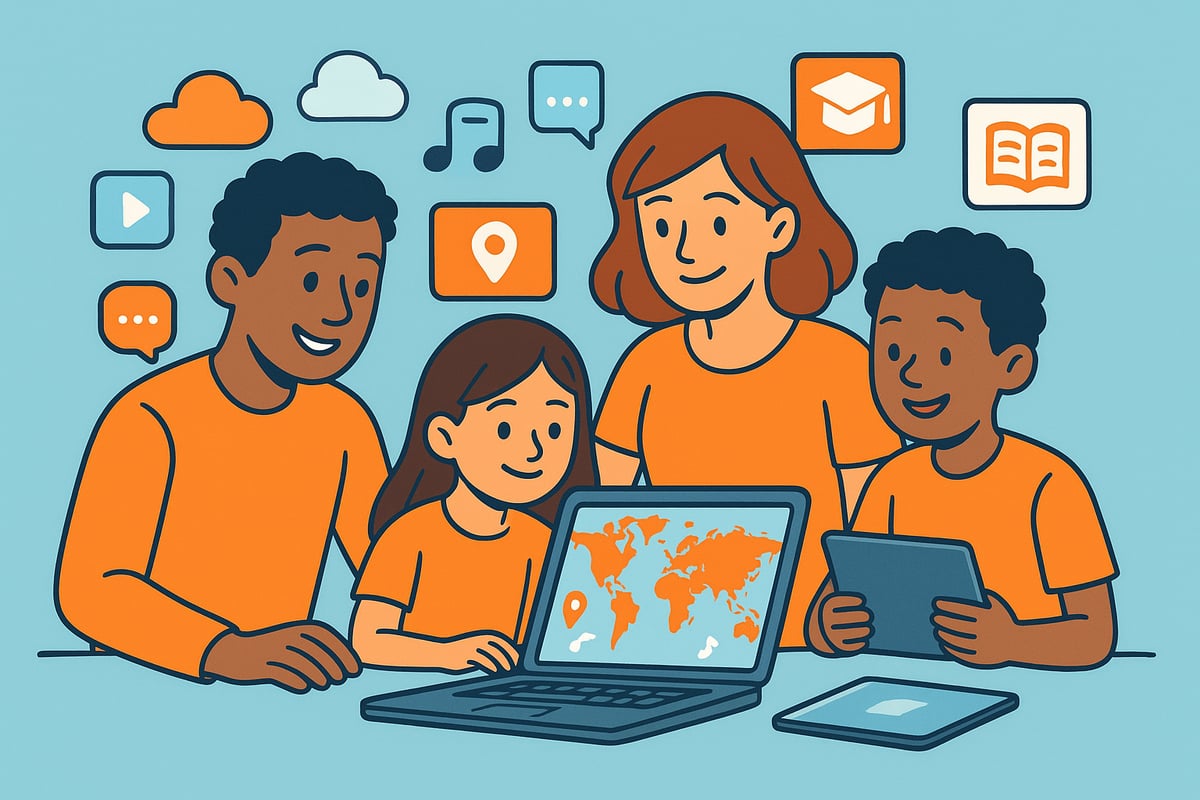
Top Digital Planners and Apps for Worldschoolers
Selecting a digital platform is crucial for a worldschool lesson planner. Popular apps like Google Classroom, Notion, and Trello provide flexibility and collaboration, making them favorites among traveling families. Each offers unique features—Notion excels at customization, Trello shines with visual boards, and Google Classroom integrates learning materials efficiently.
AI-powered tools are transforming lesson planning by tailoring content to your child’s needs. For a comprehensive review of the latest options, see the Top online lesson planners 2025. Comparing features like offline access, multi-child support, and cloud syncing helps you find the ideal worldschool lesson planner for your style.
Resource Libraries and Open Educational Content
Your worldschool lesson planner becomes more powerful when paired with rich resource libraries. Free platforms like Khan Academy and Coursera offer curriculum for core subjects, while UNESCO’s site connects you to global culture and history. These resources help you build lessons that reflect your travels and your children’s interests.
Many worldschoolers supplement with open educational resources (OER), ensuring access to high-quality content wherever they are. Embedding these materials into your worldschool lesson planner keeps learning continuous and engaging, even when you are far from traditional classrooms.
Collaboration Tools for Families and Learning Pods
Collaboration tools make it easy to share your worldschool lesson planner with tutors, co-ops, or relatives. Google Calendar and Microsoft Teams let you coordinate schedules, share assignments, and keep everyone updated across time zones. Trello boards can be customized for group projects or unit studies.
AI-driven platforms are also enhancing collaboration. Discover how educators are transforming classrooms with AI to create interactive, adaptive lessons for worldschoolers. These tools foster communication and teamwork, making global learning a shared experience.
Offline Access and Backup Strategies
Reliable offline access is a must for any worldschool lesson planner. Downloading lessons in advance, saving resources to USB drives, or printing essential packets ensures learning continues during remote travel or connectivity gaps.
Many digital planners offer offline modes, allowing you to sync updates once you regain internet access. Creating a “learning go-bag” with digital and paper backups guarantees your worldschool lesson planner is always within reach, safeguarding your educational progress in any location.
Real-World Examples and Success Stories
Families around the globe are redefining education with a worldschool lesson planner that adapts to their unique journeys. The following real-world examples showcase how diverse approaches meet the needs of modern worldschoolers.
Case Study 1: Structured Worldschooling Across Continents
One family leveraged a worldschool lesson planner to maintain structure while traveling through Europe, Asia, and Africa. Their planner integrated academic schedules with local events, allowing seamless transitions between destinations. For instance, math lessons were paired with visits to ancient ruins, making history and numeracy come alive. The planner’s flexibility ensured academic standards were met, even as the family crossed time zones and cultures. According to Worldschooling statistics 2023, structured approaches like this are growing in popularity, especially among families aiming to track progress across multiple subjects.
Case Study 2: Unschooling Through Child-Led Exploration
Another family adopted an unschooling approach, using a worldschool lesson planner as a flexible guide rather than a strict schedule. Children led their own projects, such as designing science experiments in the Amazon rainforest, with parents documenting learning milestones in the planner. This approach fostered curiosity, independence, and adaptability. The planner’s open format allowed spontaneous learning opportunities, while still providing a record of achievements. The family reported that using the planner helped balance freedom with intentional educational growth.
Case Study 3: Managing Multiple Ages and Learning Styles
A parent juggling a 7-year-old and a 12-year-old relied on a worldschool lesson planner to customize lessons for each child. Shared topics, like history, were explored together, but assignments were tailored by age and interest. The planner included color-coded sections, checklists, and reflection prompts for both children. Multi-age planning remains a top challenge, as highlighted by recent Worldschooling statistics 2023, and a robust planner is vital for keeping everyone engaged and progressing at their own pace.
Lessons Learned and Best Practices from Experienced Worldschoolers
Experienced families emphasize the importance of consistency and flexibility within their worldschool lesson planner. Batch planning sessions, regular check-ins, and monthly reviews help maintain organization. Many recommend involving children in goal setting, which boosts motivation and ownership. Using digital tools, such as AI-powered platforms described in EduPlanner: AI in instructional design, streamlines lesson customization and progress tracking, allowing families to focus more on experiences and less on logistics.
Best Practices Table
| Practice | Benefit |
|---|---|
| Batch planning | Saves time, reduces stress |
| Regular reviews | Tracks progress, celebrates wins |
| Child involvement | Encourages ownership |
| Digital tools | Enhances flexibility |
Overcoming Common Pitfalls: What Didn’t Work
Not every worldschool lesson planner strategy succeeds the first time. Some families found that over-scheduling led to burnout, while relying solely on technology sometimes left them unprepared in remote areas. The most successful families recommend building buffer time into plans, always having a backup offline resource, and being willing to adapt when unexpected changes arise. Embracing imperfection and learning from setbacks are key to long-term success with any worldschool lesson planner.
Whether you are just beginning your worldschooling journey or looking to refine your lesson planning for 2025, having the right tools can make all the difference. Throughout this guide, we explored how adaptive planning, flexibility, and the right digital resources can transform travel into rich educational experiences for your family. If you are ready to put these insights into action and want a platform that adapts to your child’s needs and your unique adventures, I invite you to Create Your Free Account. Start building a personalized, seamless worldschool lesson plan tailored for your family’s journey.