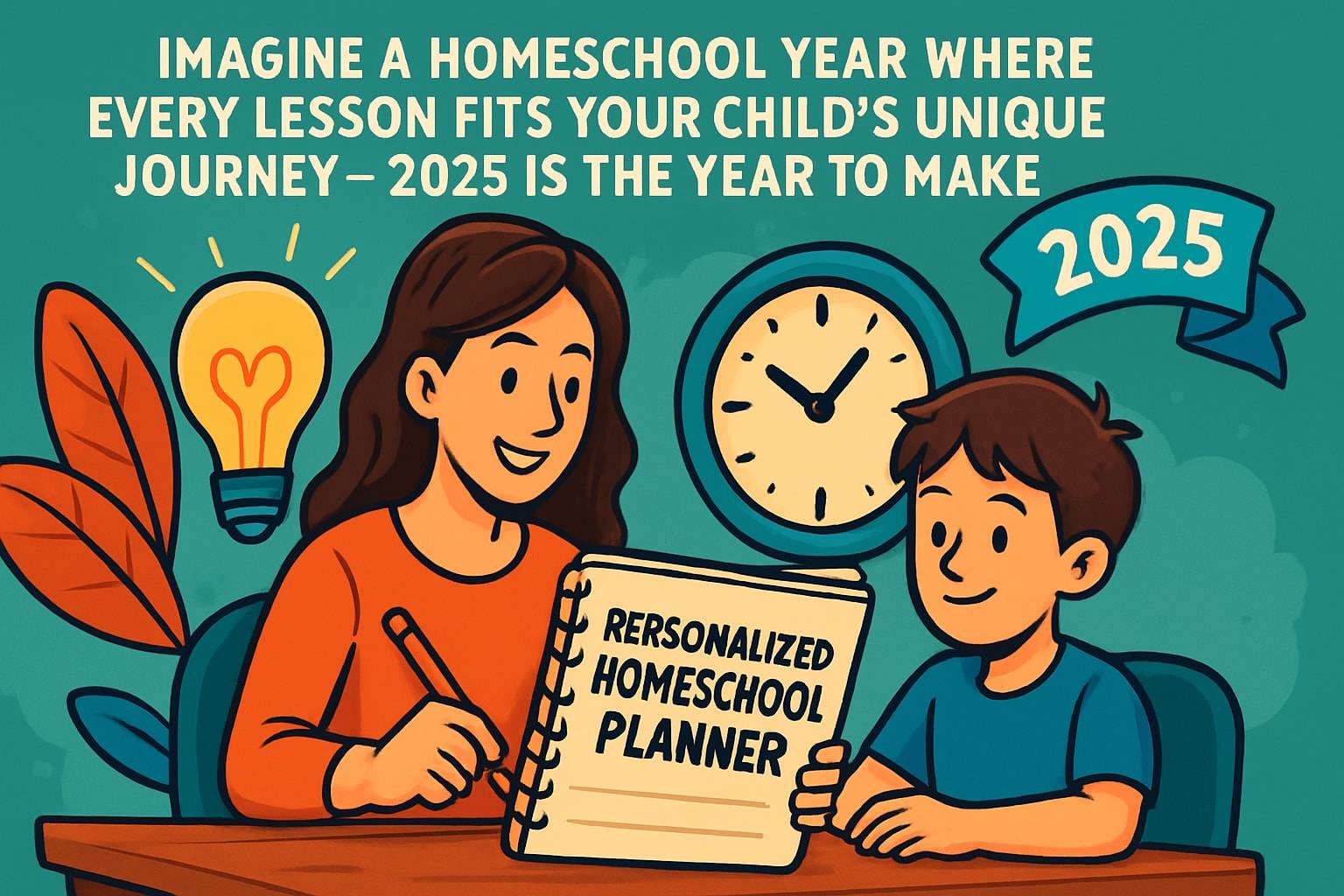
Imagine a homeschool year where every lesson fits your child’s unique journey. 2025 is the year to make this vision a reality. This guide will show you how to build a personalized homeschool planner designed to maximize learning and reduce stress for your family.
You will discover essential planner features, step-by-step customization, digital and paper planning tools, proven time management strategies, and real-world examples from successful homeschoolers. If you are ready for stress-free, tailored homeschooling, this roadmap will empower you to create a planner that works for your child’s needs and your family’s goals.
Why Personalization Matters in Homeschool Planning
The landscape of homeschooling is rapidly transforming. Instead of following a rigid, one-size-fits-all curriculum, more families are turning to a personalized homeschool planner to shape their child’s learning journey. This shift is not just a trend—it reflects a growing understanding that every learner is unique.
Recent studies show that 78% of homeschooling parents identify flexibility and customization as the main reasons they chose to homeschool. This statistic highlights the increasing demand for tools that support individualized approaches. With a personalized homeschool planner, parents can adapt lessons to fit their child’s strengths, challenges, and evolving interests.
Personalization brings several key advantages:
- Addresses diverse learning styles: Visual, auditory, or kinesthetic learners all benefit.
- Adapts to individual pacing: Children can move quickly through mastered topics or slow down when needed.
- Encourages student interests: Integrating hobbies and passions keeps learning relevant and engaging.
Consider the difference in outcomes when families use a generic planner versus a personalized homeschool planner. Generic planners often follow a fixed schedule, leaving little room for adaptation. This can lead to frustration when activities do not fit your child’s needs or when unexpected life events arise.
| Feature | Generic Planner | Personalized Homeschool Planner |
|---|---|---|
| Schedule Flexibility | Low | High |
| Student Engagement | Variable | Consistently High |
| Adaptability | Limited | Customizable |
| Motivation | May Decline | Typically Increases |
Traditional planners can quickly become overwhelming. Their rigidity may cause stress for both parents and students, leading to disengagement. When a planner fails to account for a child’s unique pace or interests, motivation often suffers.
Educational psychology supports the value of personalization. When students have a say in their learning plan, they develop a greater sense of autonomy and mastery. These qualities are linked to higher motivation, better retention, and greater academic satisfaction.
Families practicing worldschooling or unschooling especially benefit from a personalized homeschool planner. For worldschoolers, flexibility is crucial for integrating travel experiences into academics. Unschooling families often rely on child-led exploration, making a customizable planner essential for capturing spontaneous learning moments.
The role of personalization is not just about academics. It also helps children build confidence, independence, and a lifelong love of learning. For a deeper understanding of how individualized approaches empower families, visit this resource on Personalized Learning in Homeschooling.
A personalized homeschool planner transforms planning from a stressful task into an empowering process. By tailoring each lesson, activity, and goal, families can create a learning environment where children thrive—no matter where or how they learn.
Core Components of an Effective Personalized Homeschool Planner
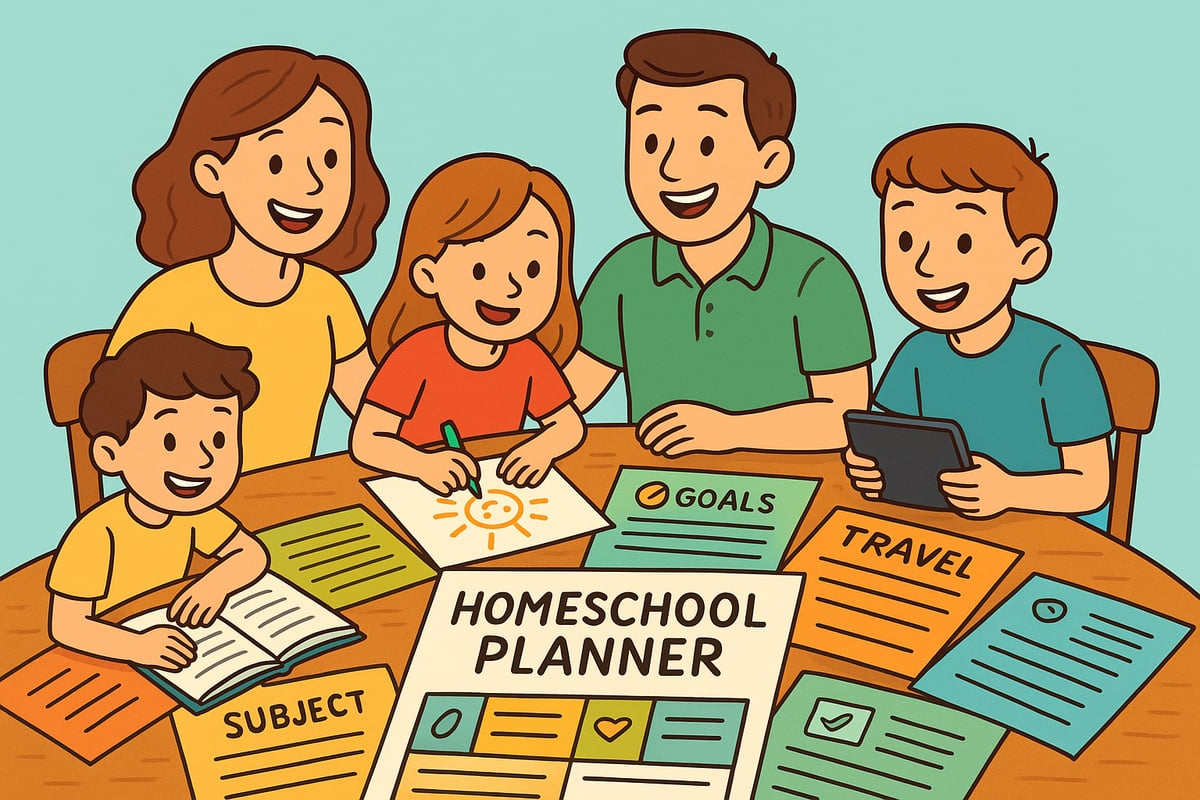
A personalized homeschool planner acts as the backbone of an effective homeschool year. By focusing on core components, you can ensure that your planning tool adapts to your family's needs, supports diverse learning styles, and keeps everyone on track. Let us explore the key sections, customization features, and strategies for balancing structure with flexibility in your 2025 planner.
Essential Sections Every Planner Needs
Every effective personalized homeschool planner should include foundational sections that support organization and growth throughout the year. Start with an academic calendar and yearly overview to map out your entire school year. This gives you a clear view of important dates, holidays, and milestones.
Next, incorporate goal-setting pages for both students and parents. These pages help track academic, social, and personal growth objectives. Subject and unit trackers allow you to monitor progress across different areas of study, making it easy to spot strengths and areas for improvement.
Assessment tools are vital for checking student understanding and celebrating achievements. Record-keeping pages document attendance and accomplishments, which is especially helpful for state reporting or portfolio reviews.
Customizable lesson plan templates are another must-have. These templates let you adapt plans for each child, whether you are using a classical, Montessori, or eclectic approach. For a visual summary, consider this layout from top-rated planners:
| Section | Purpose | Example Feature |
|---|---|---|
| Academic Calendar | Year at a glance | Color-coded months |
| Goal-Setting | Track objectives and growth | Parent and student goals |
| Subject Tracker | Monitor progress in each subject | Weekly review checklists |
| Assessment Tools | Evaluate learning and mastery | Portfolio or quiz logs |
| Record-Keeping | Document attendance and achievements | Printable logs |
| Lesson Templates | Plan daily or weekly lessons | Editable formats |
For a deeper dive into specific planner layouts and their effectiveness, see the Best Homeschool Planners Reviewed.
Customization Features for 2025
The most valuable personalized homeschool planner is one you can adapt easily as your family's needs change. For 2025, digital integration is key. Many planners now offer space to link online courses, digital resources, and educational apps. This supports blended learning and makes tracking easier.
Include sections for extracurriculars, travel, and life skills. This ensures your planner captures the full spectrum of your child's education, from music lessons to cultural trips. Adaptive planning pages help you adjust when unexpected events arise, such as illness or family moves.
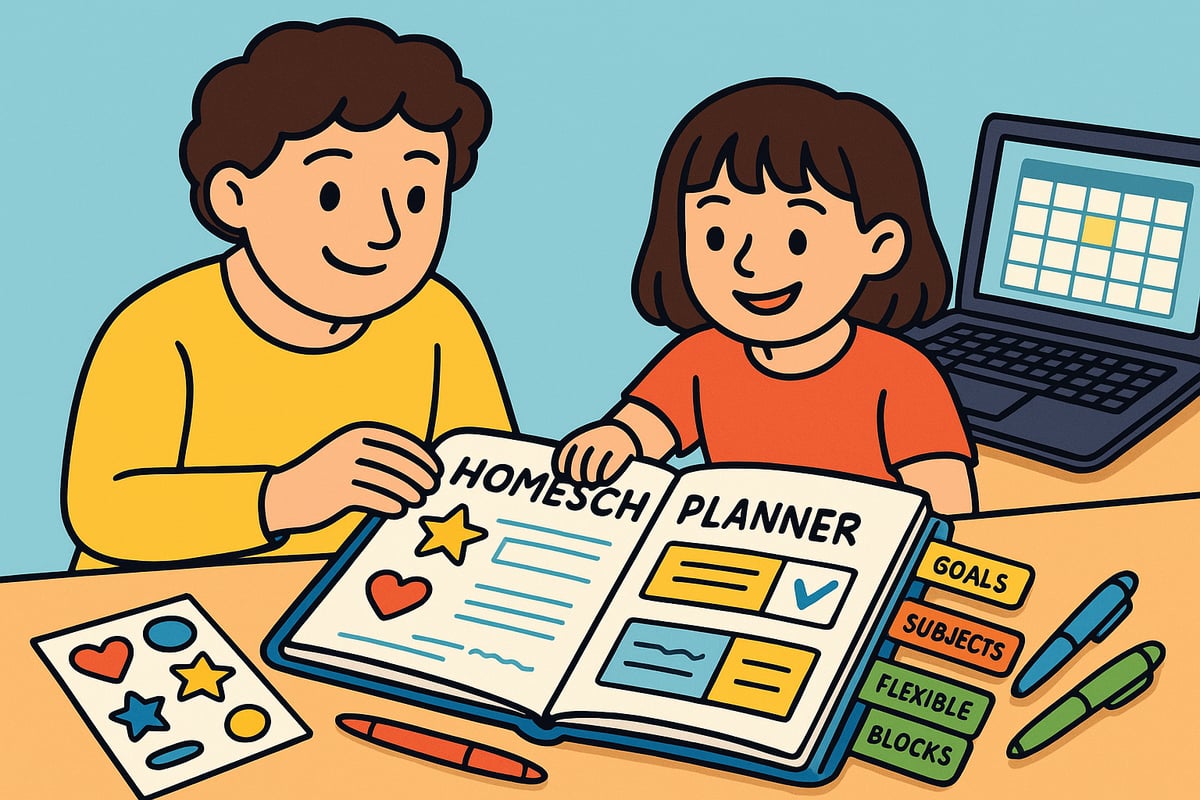
For neurodiverse learners, color-coding and visual supports can make a big difference. Use stickers, icons, or colored tabs to help organize information visually. A personalized homeschool planner should also provide places for students to share their voice and make choices about their schedule or topics of study.
Flexible section layouts are especially helpful. For example, modular pages let you rearrange units, add new subjects, or create space for spontaneous projects. This adaptability is crucial for worldschooling or unschooling families who may learn in different locations or at varying paces.
Balancing Structure & Flexibility
Striking the right balance between routine and adaptability is at the heart of a successful personalized homeschool planner. Begin by setting up modular planning views. Weekly, monthly, and quarterly overviews help you maintain a sense of structure while allowing for adjustments.
Build in unscheduled days to encourage spontaneous learning and exploration. Use tracking tools for both structured lessons and interest-led activities. This approach ensures you capture the full range of your child's experiences, from formal math lessons to impromptu science experiments.
Consider strategies like block scheduling for consistent routines, or loop scheduling for subjects that rotate throughout the week. These flexible methods work well for families with multiple children or those who travel frequently.
A real-world example: One family uses flexible planner blocks to accommodate travel-based learning. They shift lessons around field trips and adapt their schedule as new opportunities arise. This method keeps learning relevant and stress low, all within their personalized homeschool planner.
Step-by-Step: Creating Your Personalized Homeschool Planner
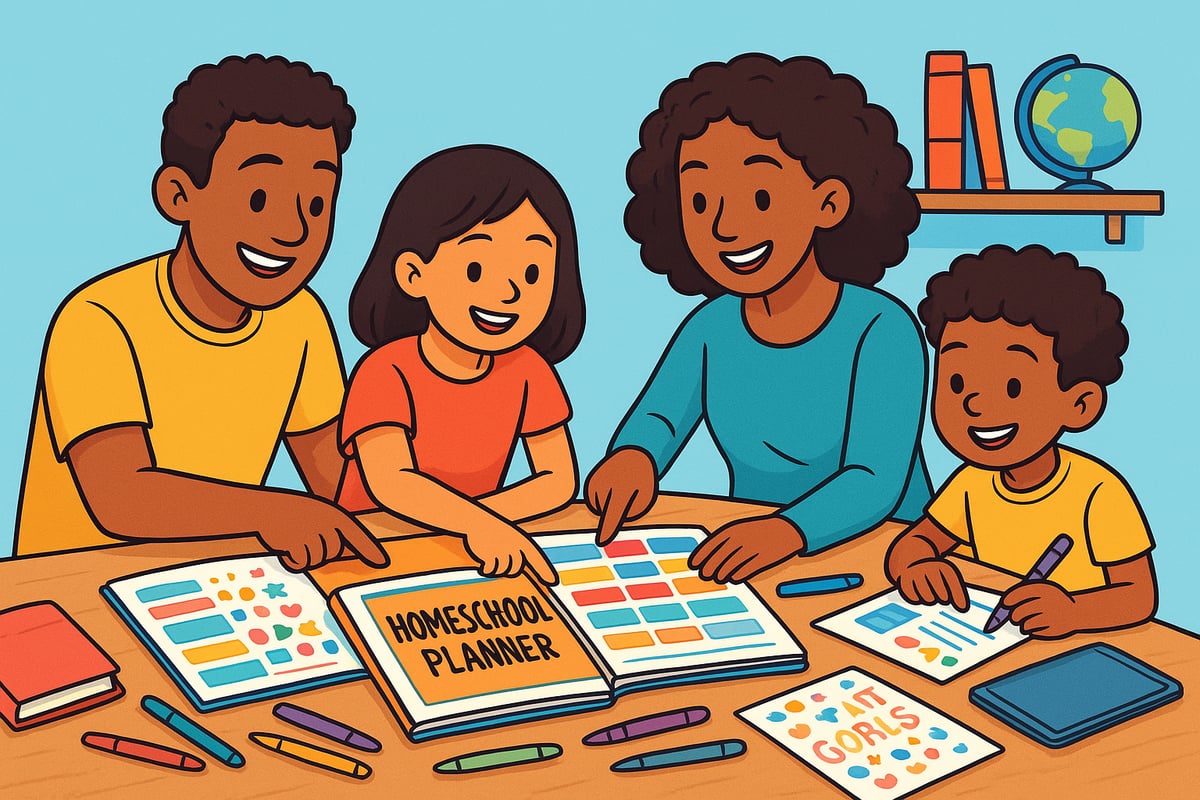
Designing a personalized homeschool planner is an empowering process that sets the tone for your family's educational journey. By breaking the process into clear, manageable steps, you can build a planner that truly reflects your goals, values, and daily realities. Below is a structured guide to creating a planner that supports both academic achievement and personal growth.
Step 1: Define Your Homeschool Vision & Goals
Begin with a clear vision for your homeschool year. Ask yourself: What do you hope your child will achieve academically, socially, and personally? Whether you lean toward classical education, Montessori, or unschooling, clarifying your educational philosophy gives direction to your personalized homeschool planner.
Collaborate with your child to set meaningful goals. This not only boosts motivation but also fosters ownership of their learning path. Use a simple worksheet to outline academic targets, personal development milestones, and social objectives. For practical guidance, explore Simple Homeschool Planning Strategies to streamline your goal-setting process.
A well-defined vision ensures your planner is not just a schedule, but a tool that inspires growth and curiosity.
Step 2: Map Out Your Yearly & Monthly Framework
Once your vision is set, sketch out the big picture. Mark important dates like holidays, family trips, exams, and project deadlines in your personalized homeschool planner. This framework helps maintain a healthy balance between structured learning and life’s spontaneous opportunities.
Backward planning is a powerful tool. Start with your end goals, then work backward to identify key milestones for each month. Consider using a year-at-a-glance template to visualize your academic journey and ensure nothing gets overlooked.
By mapping out your year, you create a foundation that keeps your family organized and adaptable throughout the homeschool experience.
Step 3: Choose Subjects, Themes & Resources
Selecting what to teach is where your personalized homeschool planner shines. List core subjects your child must cover, such as math, science, and language arts. Then, add electives based on interests—art, coding, or world cultures, for example.
Incorporate cross-curricular themes to deepen understanding and engagement. Gather a mix of books, online resources, and community programs. Many families find free or affordable materials through libraries, open educational resources, and local co-ops.
Use a simple table to track resources for each subject, ensuring your planner remains organized and comprehensive:
| Subject | Main Resource | Supplementary Materials |
|---|---|---|
| Math | Math curriculum | Online games, manipulatives |
| Science | Science textbook | Nature walks, experiments |
| Literature | Book list | Audiobooks, discussion guides |
Step 4: Design Daily & Weekly Schedules
Now, structure your days with routines that match your family’s rhythm. Block scheduling allows you to dedicate chunks of time to specific subjects, while loop scheduling introduces flexibility by rotating through activities.
Create sample daily or weekly routines tailored to your children’s ages. For example, younger students may need shorter, varied blocks, while older learners can handle longer, focused sessions. Make room for creative, physical, and social activities to support holistic development.
For families with multiple children, color-coded charts and staggered subject times help everyone stay on track within your personalized homeschool planner.
Step 5: Build in Assessment & Reflection
Assessment and reflection are vital for tracking progress and adapting instruction. Incorporate a variety of assessment methods—portfolios, hands-on projects, quizzes, and self-evaluations—to capture a full picture of your child’s growth.
Schedule regular check-ins, such as weekly reflections or monthly reviews. Use feedback to celebrate achievements and adjust plans as needed. A dedicated section in your personalized homeschool planner for reflections and goal updates makes this process seamless.
Tools like progress trackers and celebration charts can motivate students and provide tangible evidence of learning over time.
Step 6: Personalize for Your Family’s Unique Needs
Every family’s journey is different, so tailor your personalized homeschool planner to fit your unique circumstances. If your child has special needs, is gifted, or your family travels often, adapt your planner to include accommodations, enrichment activities, and travel-based learning experiences.
Add sections for local events, hands-on projects, and flexible days to accommodate life’s unpredictabilities. By building in this flexibility, your planner becomes a living document that grows and changes with your family.
A truly personalized homeschool planner is not static, but a dynamic tool that evolves alongside your educational adventure.
Digital vs. Paper Planners: Choosing the Right Tool for 2025
Selecting the ideal tool for your personalized homeschool planner in 2025 means weighing the merits of both digital and paper options. Each format offers unique benefits, and the right choice often depends on your family’s learning style, daily routines, and planning preferences.
Below, we break down the pros and cons of each, and explore how hybrid approaches can provide the best of both worlds.
Pros & Cons of Digital Homeschool Planners
Digital tools have transformed the way families approach the personalized homeschool planner. The ability to access plans from anywhere, integrate online resources, and automate repetitive tasks makes digital planners especially appealing for tech-savvy families.
Benefits of digital planners include:
- Cloud-based access, allowing instant updates and sharing with co-parents or tutors
- Integration with educational apps, resources, and video lessons
- Automated reminders for deadlines, assignments, and attendance tracking
These features can streamline the personalized homeschool planner process, saving time and reducing manual errors. However, there are challenges to consider:
- Increased screen time, which can contribute to fatigue for both students and parents
- Dependence on devices and reliable internet connections
- Privacy and data security concerns for family information
Popular digital options include platforms like Google Calendar, Notion, and Trello, as well as specialized apps designed for homeschooling. For families who value flexibility and quick edits, digital planners are a powerful choice.
Pros & Cons of Paper-Based Planners
For many families, a paper-based personalized homeschool planner offers a tangible, creative, and distraction-free way to organize the school year. Writing by hand can foster deeper engagement and memory retention, making paper planners a favorite among visual and tactile learners.
Advantages of paper planners:
- Tactile experience and visual satisfaction from physically writing, drawing, and decorating
- Reduced digital distractions, helping students focus on tasks at hand
- Creative freedom to personalize layouts with stickers, color-coding, and sketches
Despite these strengths, paper planners do present some limitations:
- Harder to update or reorganize without rewriting pages
- Risk of losing or damaging the planner
- Less portable and sharable compared to digital tools
Many families use popular homeschool planner brands or printable templates to create a system that fits their needs. Paper planners often shine when it comes to fostering creativity and mindfulness in the planning process.
| Feature | Digital Planner | Paper Planner |
|---|---|---|
| Accessibility | Anywhere, anytime | At home or on-the-go |
| Customization | High, with templates | Unlimited, by hand |
| Collaboration | Easy to share | Limited |
| Risk | Tech issues, privacy | Loss/damage |
Hybrid Approaches & Tips for Transitioning
Many families discover that the most effective personalized homeschool planner is a blend of digital and paper methods. Combining digital organization with printable or handwritten elements can maximize flexibility and engagement.
Hybrid planning tips:
- Use digital tools for scheduling, reminders, and lesson storage
- Print weekly or monthly overviews for hands-on tracking and family meetings
- Sync online calendars with custom paper templates for a unified workflow
A hybrid approach is especially valuable for worldschoolers and families who need to adapt their plans often. For example, the Worldschool Lesson Planner Guide demonstrates how flexible templates and digital resources can support learning on the move while maintaining a personalized homeschool planner for every child.
Transitioning to a hybrid method can be as simple as exporting digital plans to printable formats or supplementing a paper planner with online checklists. The key is to experiment and adjust until you find a workflow that fits your family’s evolving needs.
Time Management & Staying Organized All Year
Staying organized all year is at the heart of a successful personalized homeschool planner. With the continued growth of homeschooling, parents need robust strategies to balance learning, life, and family well-being. A clear, adaptable approach to time management is essential for keeping stress low and engagement high.
Setting Realistic Routines & Preventing Burnout
A personalized homeschool planner thrives on realistic routines. Establish daily and weekly rhythms that suit your family's pace. This helps prevent burnout and keeps everyone motivated.
Begin by setting clear start and end times for lessons. Use visual cues like wall schedules or digital alerts to reinforce routines. Remember, flexibility is vital—if a plan feels overwhelming, adjust it instead of pushing through.
According to Homeschooling statistics 2025 in USA, 60% of homeschool parents list time management as a top challenge. This highlights the importance of pacing and self-care. Recognize signs of burnout, such as irritability or lack of enthusiasm, and build in downtime for relaxation and family connection.
Celebrate small wins, and use your personalized homeschool planner to schedule breaks and self-care activities. This proactive approach can make all the difference in maintaining a positive homeschooling environment.
Tools & Techniques for Organization
Effective organization is a cornerstone of your personalized homeschool planner. Use a mix of analog and digital tools to keep your plans accessible and actionable.
Popular tools include:
- Checklists: Daily to-dos keep everyone on track.
- Trackers: Monitor progress for subjects and skills.
- Reminders: Timely notifications for assignments and deadlines.
Consider a simple table to visualize weekly organization:
| Tool | Purpose | Format |
|---|---|---|
| Checklist | Daily task tracking | Paper/App |
| Progress Log | Subject achievements | Spreadsheet |
| Calendar | Scheduling events | Wall/Google Cal |
Color-coding can help visual learners, while apps with alarms boost accountability. Choose what fits your family's style. With the right tools, your personalized homeschool planner becomes a dynamic hub for organization and progress.
Involving Students in the Planning Process
Empowering students to participate in planning increases motivation and responsibility. Even young learners benefit from age-appropriate tasks, such as choosing weekly activities or decorating their own planner pages.
Older students can help set goals, organize subject lists, and reflect on their progress. Use a personalized homeschool planner to record student ideas and preferences. This involvement fosters ownership and makes learning more engaging for everyone.
Adjusting Plans Throughout the Year
Flexibility is a defining feature of a personalized homeschool planner. Life changes, interests shift, and unexpected events happen—your plans should adapt accordingly.
Schedule regular mid-year reviews, inviting feedback from all family members. Tweak routines, update goals, and note changes in your planner. Keeping a record of these adjustments not only helps with reporting but also supports meaningful reflection at year’s end.
Consistent review and adaptation ensure your personalized homeschool planner remains a true fit for your family's evolving needs.
Real-World Examples & Inspiration from Homeschool Families
Homeschool families across the world are customizing their journeys using a personalized homeschool planner. With the dramatic rise in homeschooling, families are seeking flexible, effective ways to tailor education. According to the homeschooling statistics breakdown by the 2025 numbers, the movement is rapidly expanding, which highlights the importance of practical, personalized strategies.
Case Studies: Personalized Planners in Action
Let’s look at how different families are bringing their personalized homeschool planner to life:
-
Family 1: Worldschoolers on the Move
This family travels full-time, integrating geography, languages, and local culture into their lessons. Their personalized homeschool planner includes flexible blocks for museum visits, local festivals, and time zone changes. By adapting their schedule, they keep learning continuous and meaningful, no matter where they are. -
Family 2: Neurodiverse Learner Thriving
For a family with an autistic child, visual schedules and color-coded sections are essential. Their personalized homeschool planner uses stickers, icons, and short, focused blocks. This approach has increased their child’s engagement and confidence, making daily routines smoother and more enjoyable. -
Family 3: Multi-Age Siblings with Modular Planning
Managing three children at different grade levels, this family relies on a personalized homeschool planner with modular pages. Each child has custom subjects, shared projects, and space for individual interests. The result is a more harmonious learning environment with less stress and more collaboration.
These real-life examples show that a personalized homeschool planner can transform educational outcomes. Improved engagement, reduced stress, and steady academic growth are common results when families tailor their planning tools.
Expert Tips from Veteran Homeschoolers
Experienced homeschoolers offer invaluable advice for making the most of a personalized homeschool planner.
-
Prioritize Flexibility:
Veteran parents recommend building in wiggle room for days when plans change unexpectedly. Using undated pages or erasable pens lets you adapt quickly. -
Include Must-Have Sections:
Essential sections—like goal trackers, reading logs, and project planners—keep everyone on the same page. Many families highlight the value of daily reflection prompts for both parents and students. -
Learn from Experience:
One veteran shares, “Our personalized homeschool planner evolved every year. The more input my kids had, the more successful we became.” Involving children in the planning process increases motivation and ownership. -
Stay Consistent but Not Rigid:
Having a regular review routine keeps plans realistic. Another parent notes, “We check in every Friday, adjust, and celebrate small wins. That’s what keeps us going.”
By embracing these tips, families can unlock the full potential of a personalized homeschool planner in their daily routines.
Creative Ideas for Customization & Motivation
Personalizing a homeschool planner is also about creativity and fun. Here are some inspiring ideas:
-
Themed Pages:
Design sections around your child’s interests—nature, space, art, science, or history. Use themed stickers, washi tape, or printable inserts to make the planner visually appealing. -
Visual Organization:
Color-code subjects, use visual icons for tasks, and add progress bars or checklists. These simple touches help students, especially visual learners, stay organized and motivated. -
Reward Systems:
Incorporate celebration trackers or reward charts. Mark milestones with special stickers or notes of encouragement. This makes the personalized homeschool planner a tool for both learning and positive reinforcement. -
Student Voice:
Let your children decorate their pages, select weekly goals, or choose project topics. The more a student invests in their personalized homeschool planner, the more likely they are to stay engaged.
These ideas ensure the personalized homeschool planner remains a dynamic, motivating tool throughout the year.
How AI-Powered Platforms Like LearnSpark Support Personalized Planning
AI-driven tools are redefining what a personalized homeschool planner can accomplish. Platforms like LearnSpark use artificial intelligence to tailor lesson plans based on your child’s learning style, interests, and even location.
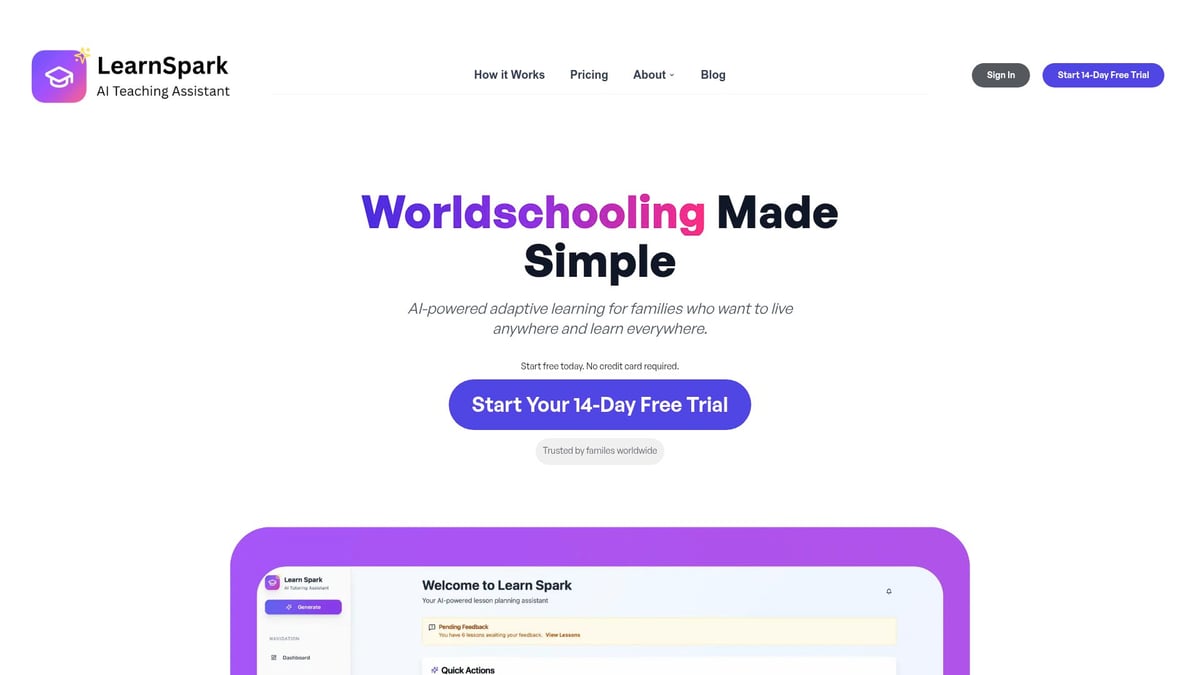
Key features include automatic progress tracking, customizable templates, and collaboration tools for families with multiple children. With a personalized homeschool planner powered by AI, parents save time and reduce overwhelm while ensuring every lesson fits their child’s needs.
One worldschooling family, for example, uses LearnSpark to plan lessons as they travel across continents. The platform adjusts to new time zones, local resources, and each child’s pace, making the personalized homeschool planner truly adaptable. For families balancing multiple ages or learning needs, AI tools like LearnSpark provide the structure and flexibility required for success.
As you step into planning your most intentional homeschool year yet, remember that the right tools can make all the difference. With the strategies and real-world examples we’ve explored, you’re well on your way to crafting a planner that truly fits your family’s journey—especially if you embrace adaptive resources that grow with your needs. If you’re ready to take the next step and see how personalized, AI-powered planning can simplify your experience and spark curiosity in your learners, I invite you to Create Your Free Account and start building your 2025 homeschool journey with confidence.