
Effective lesson planning is the cornerstone of early childhood education success in 2025. As classrooms and families navigate rapid changes, the need for clear, adaptable plans becomes more urgent than ever.
This guide is designed to help educators and parents master every aspect of lesson plan early childhood education, using proven strategies to boost children’s growth, creativity, and foundational skills.
You will discover the essentials of lesson planning, learn how to integrate modern standards, follow step-by-step planning methods, harness technology, and adapt for every learner. Ready to shape brighter futures? Read on for expert guidance.
The Foundations of Effective Early Childhood Lesson Planning
Thoughtful lesson plan early childhood education is the cornerstone of nurturing young minds. By understanding the unique needs of children ages 0 to 8, educators and parents can lay a foundation for lifelong learning. This section explores what makes early childhood lesson planning effective, the guiding principles for 2025, the influence of standards, and practical solutions to common challenges.
Defining Lesson Planning in Early Childhood Education
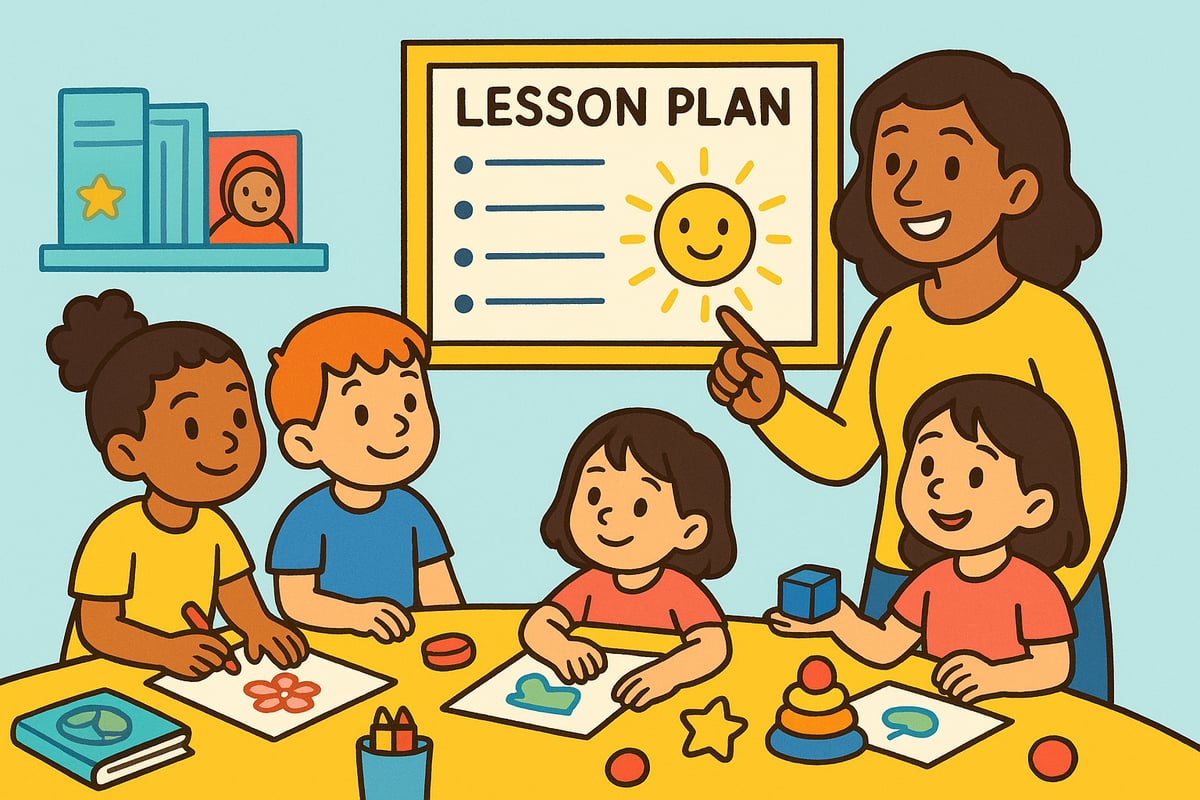
A lesson plan early childhood education is a detailed guide for teaching children from birth to age eight. Unlike K-12 plans, these focus on play-based and experiential learning rather than direct instruction. Flexible weekly thematic units, like exploring "Colors" or "Family," often take precedence over rigid daily activity schedules.
Early childhood plans prioritize hands-on experiences, sensory exploration, and social interaction. For instance, a plan may include painting with primary colors, singing, and storytime. The NAEYC’s Developmentally Appropriate Practice Guidelines recommend aligning activities with children's developmental stages, ensuring each lesson plan early childhood education meets young learners where they are.
Key Principles for 2025 Lesson Plans
Effective lesson plan early childhood education in 2025 centers on holistic development. This means addressing cognitive, social-emotional, physical, and language domains. Flexibility is crucial, allowing educators to adapt to children's evolving interests and needs.
Cultural relevance and inclusivity are also central. Incorporating multicultural stories and activities not only enriches the curriculum but also fosters belonging. For example, reading folktales from different cultures or celebrating diverse holidays. Studies confirm that culturally responsive lesson plan early childhood education increases engagement and achievement for all children.
The Role of Standards and Frameworks
Widely adopted standards like Head Start and state Pre-K guidelines shape the objectives in lesson plan early childhood education. These frameworks ensure that lesson goals align with developmental milestones and provide a structure for assessment.
Balancing these standards with child-led exploration is key. For example, while aligning activities with state-mandated literacy milestones, educators still allow room for spontaneous play and discovery. Data shows that 89 percent of U.S. states have formal early learning standards, making them a fundamental part of every lesson plan early childhood education.
Common Challenges and Solutions
Designing a lesson plan early childhood education often means working with limited resources, time, and diverse student abilities. Educators may encounter resistance to new planning models or technology.
Solutions include collaborative planning sessions, which boost lesson quality and share the workload. Using templates streamlines the process, while ongoing professional development keeps strategies fresh. For example, peer planning meetings allow teachers to exchange ideas and refine their lesson plan early childhood education for greater impact.
Step-by-Step Guide to Creating a Successful Lesson Plan
Creating a robust lesson plan early childhood education requires a structured yet flexible approach. By following these steps, educators and parents can design plans that spark curiosity, foster growth, and meet modern standards for early learning success.
Step 1: Setting Clear Learning Objectives
Every effective lesson plan early childhood education starts with intentional, measurable objectives. These goals guide what children should know or be able to do by the end of the lesson. Objectives should align with developmental milestones and be realistic for the age group.
Use action verbs adapted from Bloom's Taxonomy, such as “identify,” “describe,” or “create,” to ensure clarity. For example, an objective might be, “Children will identify primary colors through painting activities.”
Tips for setting objectives:
- Keep them specific and focused.
- Ensure they are age-appropriate.
- Align with state or national standards.
Clear objectives lay the foundation for successful lesson plan early childhood education and help track progress over time.
Step 2: Selecting Engaging Themes and Topics
Choosing relevant and stimulating themes is key to a memorable lesson plan early childhood education. Themes should connect to children’s lives, interests, or the world around them, sparking natural curiosity.
Popular theme ideas include:
- “All About Me” to promote self-awareness.
- “Spring in Our Neighborhood” for exploring seasons.
- “Family Traditions” to celebrate diversity.
Thematic teaching improves retention and enthusiasm. By rotating themes seasonally or monthly, you ensure content stays fresh and engaging. A well-chosen theme energizes both educators and learners, making lesson plan early childhood education more impactful.
Step 3: Designing Activities for Multiple Domains
Holistic growth is at the heart of any lesson plan early childhood education. Activities should address cognitive, social, emotional, and physical development, ensuring a balanced experience for all learners.
Consider integrating:
- Art projects for creativity and fine motor skills.
- Storytime and group discussions for language and social skills.
- Movement games and sensory bins for physical and sensory development.
For example, after reading a story, children might create puppets and participate in a group performance. Mixing individual and group tasks keeps children motivated and supports a range of learning styles within your lesson plan early childhood education.
Step 4: Integrating Assessment and Observation
Ongoing assessment is vital to a responsive lesson plan early childhood education. Use formative tools such as observation checklists, anecdotal notes, and child portfolios to monitor progress.
Document key moments, such as a child using new vocabulary during circle time, to inform instruction. Most early educators rely on observation as a primary assessment tool, enabling them to adapt lessons in real time.
For those interested in tech-driven solutions, explore Best AI Lesson Planning Tools to streamline assessment and gather insights efficiently. Thoughtful assessment ensures your lesson plan early childhood education meets each child’s evolving needs.
Step 5: Preparing Materials and Environment
A well-organized environment boosts engagement in lesson plan early childhood education. Prepare all materials in advance to support smooth transitions and maximize learning time.
Set up diverse learning centers, such as:
- Rotating sensory bins.
- Dramatic play props.
- Reading nooks with multicultural books.
Ensure safety and accessibility for all children. Flexible spaces allow for both independent exploration and group activities. When the environment is thoughtfully arranged, children feel secure and eager to participate in your lesson plan early childhood education.
Step 6: Reflecting and Adapting Plans
After each lesson, reflection is crucial for continuous improvement. Review what worked well and what could be adjusted in your lesson plan early childhood education. Gather feedback from children, co-teachers, or parents to gain new perspectives.
Make real-time adjustments, such as modifying a math activity for children who need extra support with counting. Regular reflection leads to more effective lesson plan early childhood education and supports ongoing professional growth.
By following these six steps, your lesson plan early childhood education will be comprehensive, adaptable, and ready to inspire every young learner.
Integrating Technology and Modern Tools in Lesson Planning
Technology is reshaping how educators approach lesson plan early childhood education. With new digital resources, AI-driven tools, and best practices for tech integration, educators and parents can deliver richer learning experiences than ever before.
Digital Resources for Early Childhood Lesson Plans
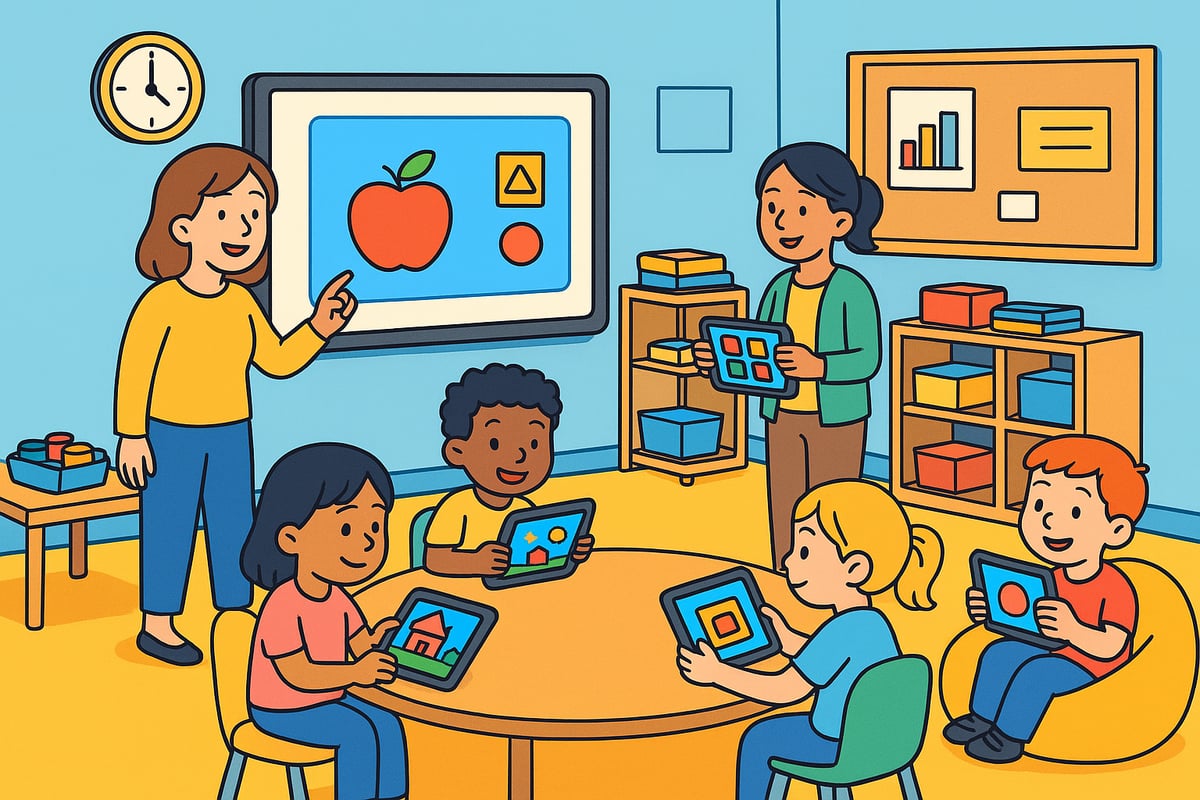
Digital resources bring fresh possibilities to lesson plan early childhood education. Top platforms and apps offer ready-made lesson templates, interactive games, and multimedia content that spark curiosity in young learners.
Educators benefit from:
- Time-saving planning tools
- Access to constantly updated materials
- Easy integration of videos, music, and interactive stories
For example, interactive story apps and virtual field trips can transform a traditional lesson into an engaging, multisensory experience. According to EdTech Digest, 72 percent of early educators now use digital tools weekly, reflecting this growing trend.
These resources help educators provide more dynamic activities and adapt to children’s evolving interests.
Streamlining Planning with AI and Automation
AI-powered platforms are revolutionizing lesson plan early childhood education by generating personalized lesson plans tailored to each child’s needs. Automation can handle progress tracking, recommend targeted resources, and even suggest adaptive activities, reducing time spent on administrative tasks.
For instance, AI can analyze observation data, highlight learning gaps, and recommend next steps. This allows educators to focus on direct interaction and creative instruction. Real-world applications of AI in early childhood settings are explored in How Educators Are Transforming Classrooms with AI, offering practical insights for modern classrooms.
As AI continues to evolve, its ability to support differentiated instruction and streamline planning will become even more essential.
Ensuring Developmentally Appropriate Tech Use
Integrating technology into lesson plan early childhood education requires careful consideration. The American Academy of Pediatrics recommends no more than one hour per day of high-quality screen time for children ages two to five.
To maintain a healthy balance:
- Blend digital activities with hands-on, play-based learning
- Choose interactive, collaborative apps over passive content
- Use tablets for group art projects or guided exploration
For example, children might collaborate on digital art, then transfer their creations into a sensory activity. This approach ensures technology remains a supportive tool, not a replacement for active play and social interaction.
Professional Development and Tech Integration
Effective integration of technology in lesson plan early childhood education depends on well-trained staff. Ongoing professional development empowers educators to use new tools confidently and creatively.
Key strategies include:
- Regular workshops focused on digital lesson planning
- Peer mentoring and collaborative planning sessions
- Access to online resources and support communities
When educators receive ongoing training, they report increased confidence and improved lesson quality. This investment ensures technology enhances learning rather than complicating it, benefiting both teachers and young learners.
Adapting Lesson Plans for Diverse Learners and Settings
Adapting a lesson plan early childhood education approach is vital to ensure every child’s needs are met. Today’s classrooms, whether in centers, homes, or global settings, are more diverse than ever. Educators and parents must design flexible plans that support individual growth, celebrate differences, and foster equitable learning experiences.
Differentiating Instruction for Individual Needs
Differentiation is central to a successful lesson plan early childhood education strategy. Children develop at their own pace, so lessons must be adapted for different abilities, languages, and learning preferences. Strategies include:
- Using flexible groupings based on interest or readiness
- Designing open-ended activities with multiple entry points
- Providing visual, verbal, and hands-on instructions
For example, a science experiment can be modified with sensory-friendly materials for children sensitive to touch. Research shows that differentiated instruction leads to higher engagement and achievement. For additional guidance, explore the ECTA Center: DEC Recommended Practices, which offers evidence-based strategies for adapting lessons to diverse learners.
Supporting Children with Special Needs
An inclusive lesson plan early childhood education approach ensures children with special needs thrive. This means integrating Individualized Education Program (IEP) goals directly into daily activities. Collaboration with specialists and families is key to identifying accommodations, such as visual schedules or adaptive seating.
Consider a child with autism spectrum disorder who benefits from a predictable routine. Visual cues and step-by-step instructions help create a sense of security. According to the U.S. Department of Education, 13% of preschoolers receive special education services, highlighting the importance of tailored supports in every classroom.
Culturally Responsive and Inclusive Planning
Embedding cultural responsiveness in every lesson plan early childhood education process nurtures a sense of belonging. Lessons should reflect children’s lived experiences, languages, and family structures. Avoiding stereotypes and tokenism is essential for authentic inclusion.
Practical ideas include celebrating diverse holidays, sharing multicultural stories, and inviting families to contribute traditions or recipes. Research confirms that inclusive classrooms foster empathy, social skills, and better academic outcomes. By valuing every child’s identity, educators lay the groundwork for lifelong respect and curiosity.
Planning for Various Educational Settings
The flexibility of lesson plan early childhood education is critical across different environments. Center-based, home-based, and outdoor settings each require unique adaptations. For mixed-age groups or worldschooling families, plans might blend group activities with individualized exploration.
For instance, circle time can be reimagined for a family co-op, allowing siblings of different ages to participate at their level. Outdoor learning may focus on nature walks and hands-on discovery. Homeschooling parents can draw inspiration from global resources and local culture, ensuring that every setting supports holistic development.
Future Trends and Best Practices in Early Childhood Lesson Planning
Early childhood education is evolving rapidly, and so are strategies for building a lesson plan early childhood education approach that truly supports young learners. As we look to 2025, educators and parents need to stay ahead of emerging trends and best practices. Let's explore the key areas shaping the future of lesson planning for early learners.
Embracing Play-Based and Inquiry Learning
One of the most significant trends in lesson plan early childhood education is a renewed emphasis on play-based and inquiry-driven learning. Instead of rigid routines, educators are designing environments where children explore, ask questions, and solve problems through hands-on activities.
This approach allows for a balance between structure and open-ended opportunities. For example, a project-based unit on community gardens might let children plant seeds, observe changes, and record their findings, sparking curiosity and critical thinking.
Research consistently shows that play-based curricula help develop executive function skills such as self-regulation and cognitive flexibility. By making play central to every lesson plan early childhood education strategy, educators can nurture both creativity and foundational academic skills.
Focus on Social-Emotional Learning (SEL)
Integrating social-emotional learning into every lesson plan early childhood education design is essential for 2025. SEL supports children's ability to manage emotions, build relationships, and make responsible decisions.
Practical SEL activities include feelings charts, group problem-solving games, and daily check-ins. These practices help children develop empathy, resilience, and cooperation.
Notably, SEL is more than a trend. Studies reveal that well-implemented SEL programs lead to an 11 percent gain in academic achievement. Embedding SEL into every lesson plan early childhood education framework ensures that children gain tools for lifelong success.
Family Engagement and Community Connections
Family engagement is a cornerstone of effective lesson plan early childhood education. Involving families and communities can make learning more meaningful and relevant for children.
Educators are increasingly inviting parents to share cultural traditions, participate in classroom activities, or connect with local experts. This collaborative approach strengthens bonds and broadens children's horizons.
For those seeking adaptable strategies, the Flexible Worldschooling Curriculum Guide offers insights into creating lesson plans that fit diverse family settings, from home-based learning to global travel. Strong partnerships with families improve attendance, motivation, and outcomes for every child.
Continuous Improvement and Reflective Practice
Ongoing professional growth and reflection are vital in crafting a lesson plan early childhood education approach that keeps pace with change. Educators are using tools like teaching journals, peer reviews, and professional conferences to refine their practice.
Feedback loops—whether from colleagues, data, or family input—help teachers adjust plans and improve lesson effectiveness. For actionable tips on refining your planning process, explore Simple Homeschool Planning Strategies.
By embracing reflection and continuous improvement, educators ensure that lesson plan early childhood education methods remain effective and relevant in a shifting educational landscape.
The Role of Adaptive Platforms in Modern Lesson Planning
Adapting lesson plan early childhood education to meet the needs of every child is more crucial than ever in 2025. As classrooms and learning environments grow more diverse, educators and parents are turning to AI-powered adaptive learning platforms for support. These innovative tools respond in real time to each child's developmental level, interests, and unique learning context, making lesson planning more dynamic and effective.
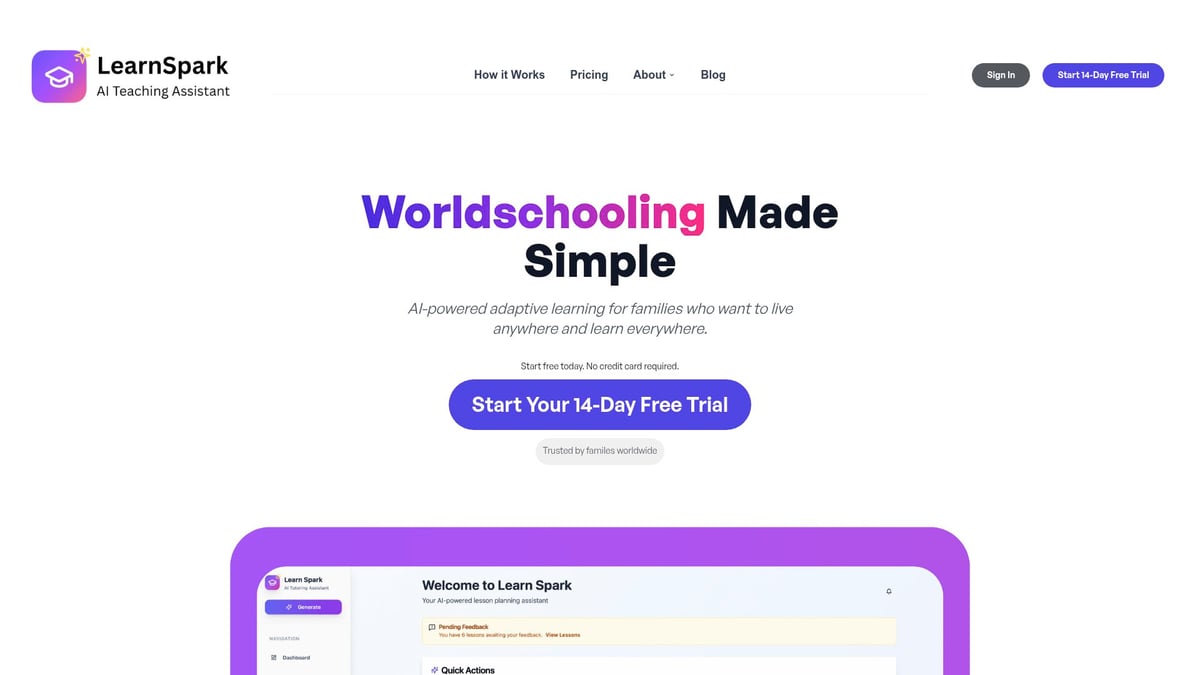
AI-powered platforms such as LearnSpark are transforming how lesson plan early childhood education is developed and delivered. These platforms empower educators and families to build flexible, individualized lesson plans with ease. Automated progress tracking, curriculum alignment, and editable lessons allow for ongoing adaptation to each child's growth, while collaborative tools make it simple for co-educators and parents to work together.
One of the standout benefits of adaptive platforms is their versatility across diverse educational settings. For example, a family traveling the world can use LearnSpark to create lesson plan early childhood education activities that incorporate local culture and geography. The platform automatically adjusts content for each child, ensuring developmental milestones are met, whether learning happens at home, on the road, or in a mixed-age group.
The impact of adaptive lesson planning is significant. Internal LearnSpark data shows these platforms can reduce administrative workload by up to 90 percent, freeing educators and parents to focus on direct engagement with children. By ensuring comprehensive coverage of all learning domains and supporting real-time adaptation, these tools boost confidence among non-teacher parents and help every child succeed. As education becomes more personalized and mobile, integrating AI-powered platforms into lesson plan early childhood education is essential for preparing young learners for a rapidly changing world.
As you look ahead to shaping meaningful lesson plans for early childhood education in 2025, remember that you do not have to navigate this journey alone. With the right tools, you can confidently support your child’s curiosity and growth—no matter where learning takes place. Platforms like LearnSpark bring adaptive, personalized lesson planning to your fingertips, making it easier to focus on your child’s unique interests and development while traveling or exploring new environments. If you are ready to simplify planning and empower your family’s educational adventure, Create Your Free Account and see how seamless learning can become.